

As technology vendors race to embed AI agents into the software platforms customers are already using, channel partners are sizing up potential threats to IT services — and looming opportunities. Zendesk is aiming to bring its partners along on its agentic journey, according to Carrie Francey, SVP of partner sales for the CRM vendor.
The company unveiled plans to deploy agentic AI across the customer service-focused Zendesk Resolution Platform rolled out in March. Autonomous Service Workforce targets a familiar enterprise pain point: new tools bolted onto old workflows to deliver automation without necessarily solving customer problems.
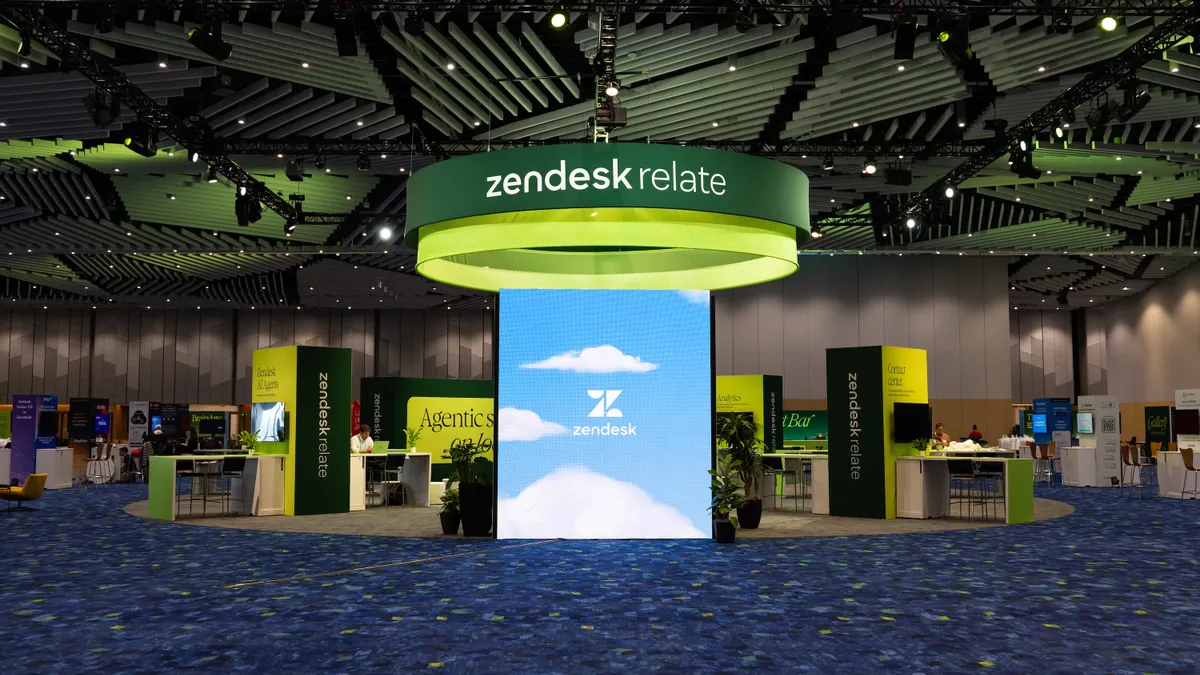
Zendesk’s solution, announced at the company’s Related conference in Denver, replaces deflection-based bots with AI agents trained to handle complex workflows and priced solely on verified resolutions. channels and handle more complex use cases.
Zendesk CEO Tom Eggemeier touted the release as the end of the chatbot era in a Tuesday press release announcing the agents.
“Every business will soon run on specialized AI agents that work alongside human experts as one unified team,” Eggemeier said.
For resellers, managed service providers, systems integrators and other channel partners, agentic tools can lead deeper into the client environment, where added complexity brings greater responsibility.
“This is really a move from helping customers set up simple bots to helping them rethink how service gets done,” Francey told Channel Dive. “It’s less about ‘how do we deflect this ticket?’ and more about ‘how we design an AI-powered service operation that actually resolves issues end to end?’”
Resolutions require partners to delve into how support work progresses through an organization, where approvals happen, which systems need to be connected, what data an agent should be allowed to access and where humans still need to stay in the loop. It puts a new spin on the partner motion, according to Francey.
“[I]t becomes more of a longer-term transformation effort, with room for recurring services, repeatable IP and optimization,” Francey said. “This is a shift from bot installer to trusted service architect.”
Zendesk introduced an agent building toolkit as part of the product revamp. The no-code interface lets users build, test, deploy and optimize agents based on policies, workflows, data and business logic.
On paper, no-code tools sound like bad news for service providers. Zendesk has another perspective.
“Even though the tool is no-code, the need for partner expertise doesn’t go away. It becomes more important,” Francey said. “Partners are force multipliers and trusted advisors, playing a critical role in helping customers realize the full value of Agent Builder. We are leading this journey with our partners and already have hundreds trained and certified ready to help customers through the process.”
Zendesk is expecting partners and their customers will want to build their own AI agents, an impetus Zendesk supports, with caveats.
“If partners are going to build agents for serious business use, those agents still need to meet enterprise standards for quality, governance, permissions and accountability,” Francey said. “In other words, it’s not just about building something that works in a demo, it has to be reliable, auditable and supportable in production.”
Partners should look to the industries and workflows they know well, including retail, financial services, employee service, IT support and other operationally specific use cases.
“The opportunity is strongest for partners when they're building agents around the kinds of problems they know best,” Francey said.
Resolution solutions
The pivot to outcome-based pricing adds an important consideration for partners. Zendesk customers will pay only for verified resolutions, confirmed by both the AI agent that resolves the interaction and a separate evaluation model. Spam and routine exchanges are excluded. The model shifts partner economics from traditional license resale toward advisory, managed services and ongoing optimization. It also puts more pressure on partners to tie their work to measurable outcomes.
“Customers will increasingly expect a link between what they are paying for and the value they get,” Francey said. “The upside is that partners can get much closer to the business-impact conversation. The tradeoff is they’ll need to adopt a model that’s more about outcomes than activity.”
Outcome-based models only work if AI agents can do more than answer questions. The models need access to core systems, which places integration, permissions and workflow orchestration squarely in the partner lane.
Zendesk is moving in that direction with Action Flows for AI Agents, Zendesk Model Context Protocol client and server capabilities, expanded Knowledge Graph connectors and more than 40 prebuilt workflow connectors for systems including Okta, Claude and OneDrive. It’s planning to release more than 100 additional apps by the end of the year.
The company has expanded knowledge connectors for sources including SharePoint, Google Drive, Notion, Guru, Contentful and Document360, too. Its employee service AI agents work with Slack, Microsoft Teams and other similar productivity tools, search across enterprise systems and enforce source-level permissions.
Integrations put growing governance concerns in the hands of partners. AI agents can’t resolve much without the right information. But giving agents access to data without clear strategy, permissions and workflow controls creates risk.
“AI agents are only as good as the systems they can safely connect to,” Francey said.
Partners that can provide operational guidance will have an edge. Customers need help connecting knowledge, ticketing, identity, collaboration and workflow systems in useful ways that don’t devolve into a governance mess.
“That means defining the strategy aligned to these connected systems, making sure permissions and visibility are handled correctly, and orchestrating workflows, so the agents can actually take action,” Francey said. “It’s not just about plugging one app into another; it’s about helping customers execute against a strategic vision for how service runs across the business.”
Correction: The byline for this story has been updated to reflect that it was written by Kelly Teal.