

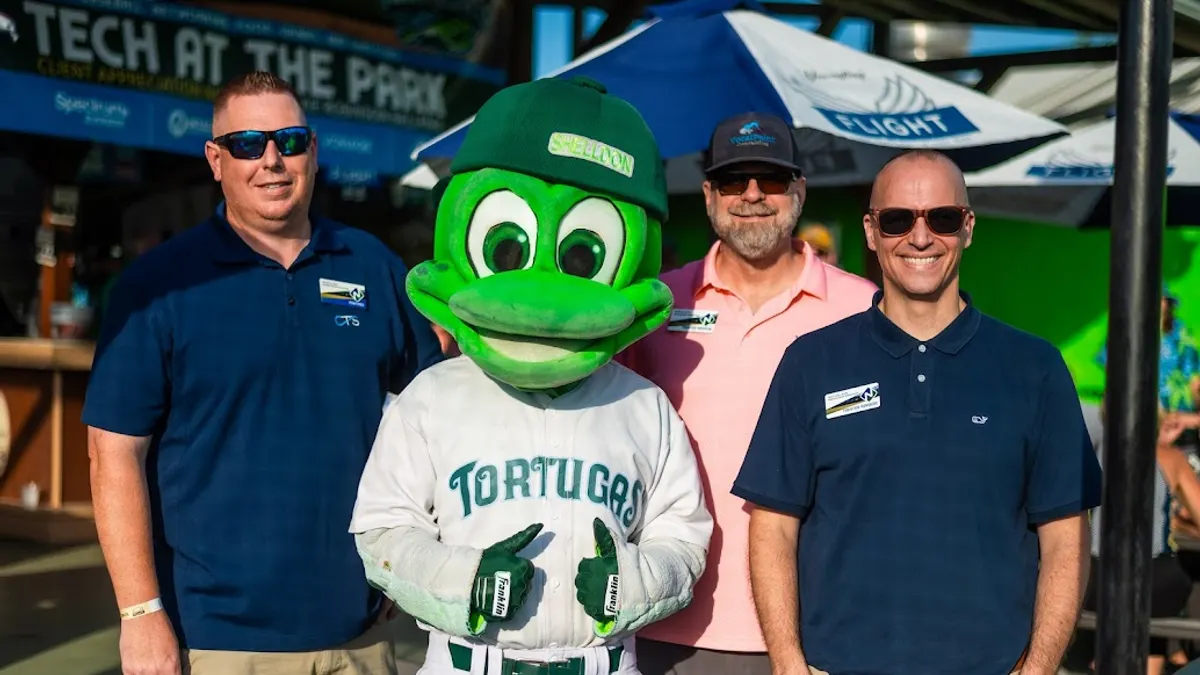
When Michael Agri was asked why he invites other technology advisors to his annual customer appreciation event, his answer was simple.
“Most of them brought me all these clients,” Agri, president of North Atlantic Consultants, told Channel Dive. North Atlantic Consultants and three other agencies last year formed a partner network called Verticle, through which they trade leads to collectively cross-sell into customer accounts.
They join a growing movement of TAs partnering to sell to and support clients. Agri said 60% of his 2025 business came from referrals he got from members of the Technology Advisor Alliance.
While some TAs are hiring subject matter experts to enter new technologies and verticals and some are being subsumed into private equity-backed platforms, others see partnerships as the way forward.
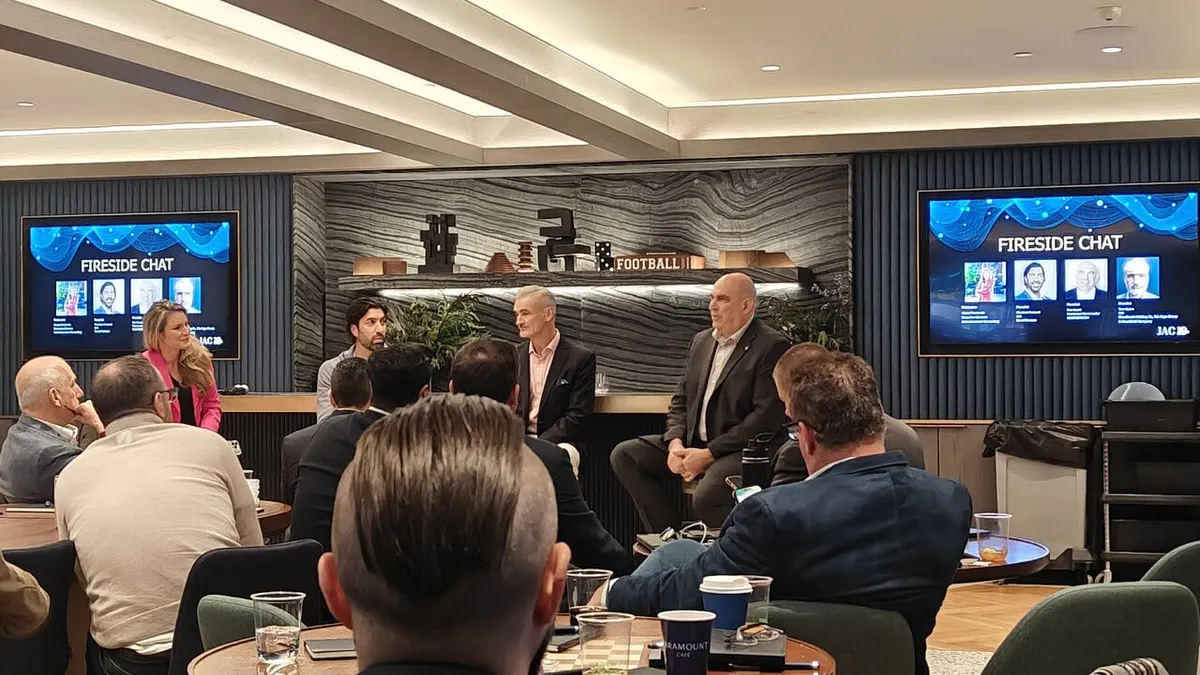
“If you want to look bigger and look like you have more expertise, the trend now is TAs are coming together, putting agreements together, and we go to market together,” said Accelerate Partners CEO JP Panzica, whose company invited TAs to its sales kickoff in February. Accelerate helps partners consult on cybersecurity and manage LLM adoption.
Large LLM providers don’t pay partner commissions, which makes services the next best revenue stream. Services, however, aren't native to the TA business.
“Do I build it and recognize the revenue in my TA? Do I have a subsidiary LLC that does AI MSP work? These are real time discussions being had by the next-gen TAs of how we're going to handle the position,” Panzica said.
TA partnerships differ from massive “superagents,” which staff multiple technology practice areas internally. Seth Penland, CEO of Columbia Capital-backed Bluewave Technology Group, said onstage at the Channel Partners Conference & Expo last week that national platforms and a few regional boutiques will eventually own 80 to 90% of the TA market. Partnerships allow the smaller firms to pool their resources to stay competitive.
Agri believes IT buyers want to treat TAs like a primary care physician. When the patient has a foot injury, the doctor writes a referral to a foot specialist. Clients understand value partners who recognize strengths and bring in experts to complement them.
“Collaboration, in my opinion, it's no longer optional. It is mandatory,’ Agri said.
The use cases vary. Sierra Peak Solutions President Sonya Ziegler Meline lends her expertise in the hospitality sector to other partners, while bringing in a partner for the contact center and AI. Agri gets referrals for Vonage and RingCentral customers who need a certified partner to manage their solutions. Accelerate employs CISOs who know the security space.
Thanks to partnerships, TAs don’t have to tell customers “no” — nor do they have to fake it.
“I'd rather make sure that my clients get the expertise that they need, versus me coming in there and trying to put a square peg in a round hole,” Ziegler Meline said at the Channel Partners Conference & Expo.
One of Accelerate’s partners was helping a credit union to evaluate its telecom expenses. The credit union wanted to move into the cloud, but the TA wasn’t skilled in that area. Accelerate entered the deal, sourced disaster-recovery-as-a-service and brought the client into a Tierpoint data center.
Tech services distributor Telarus split the commission between the two partners. The residual commission model makes it easy for partners to team on deals.
“We don't have to even pay hourly costs for them, which is incredible, because they're in the same business as us,” TAA Co-founder Ashley Rowland said. “So they understand what the payout is if we close the deal together.”
Why partnerships are proliferating
TSDs are enabling partner collaboration with revenue sharing options. In decades past, the original TA would need to cut a check to its partner. Now the upstream TSD can simply financially restructure the deal.
“Intelisys or Sandler or Telarus will literally send me a check for 50% and send you a check for 50%, and we don't even have to touch anything,” Agri said.
TSDs offer specialized sales engineers that TAs can bring onto client calls to punch above their weight class. The problem is that there is a finite number of sales engineers to consistently service the TA community.
“The TSDs are hiring some really good engineers. But sometimes on a big opportunity, a customer is like, 'Oh, this was a great meeting. Let me bring in this team,’” TAA Co-founder Ryan Rowland said. “It's meeting after meeting after meeting, and the TSDs are like, 'Hey guys, we've got other TAs who want to use this engineer too. You can't pin them down for six meetings this month.’”
Partners are also more connected and visible to each other than they were in the past. TA are using third-party associations like the TAA and TCSP to vet prospective suppliers and partners.
“Never before did we have anything like that where we can meet privately with no TSDs, no providers, and we can share secrets,” Agri said. “We can share information like, 'Who's terrible?' Because knowing who's bad at things is just as important as knowing who's great at things.”
Vendors are also increasingly pro-partnership, according to Cynthia Ferrell, whose firm TeamKC Telecom is part of the Verticle group. Unified communications and contact center providers actually expect the sales partner to bring in a professional services partner. The key is notifying them at the outset of the deal, Ferrell said.
“You don't get any pushback whatsoever,” she said.
Leaning into partnerships at Verticle has been energizing for George Stewart, managing director of Prime Telecom Consulting.
“Now I'm part of a team that goes to market together. I've got an unbelievable sales arm that I've never had before,” Stewart said.