

Dive Brief:
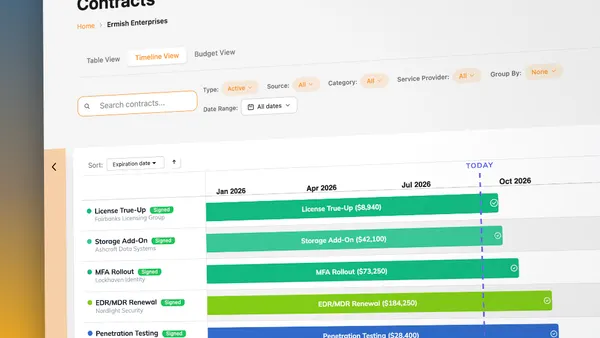
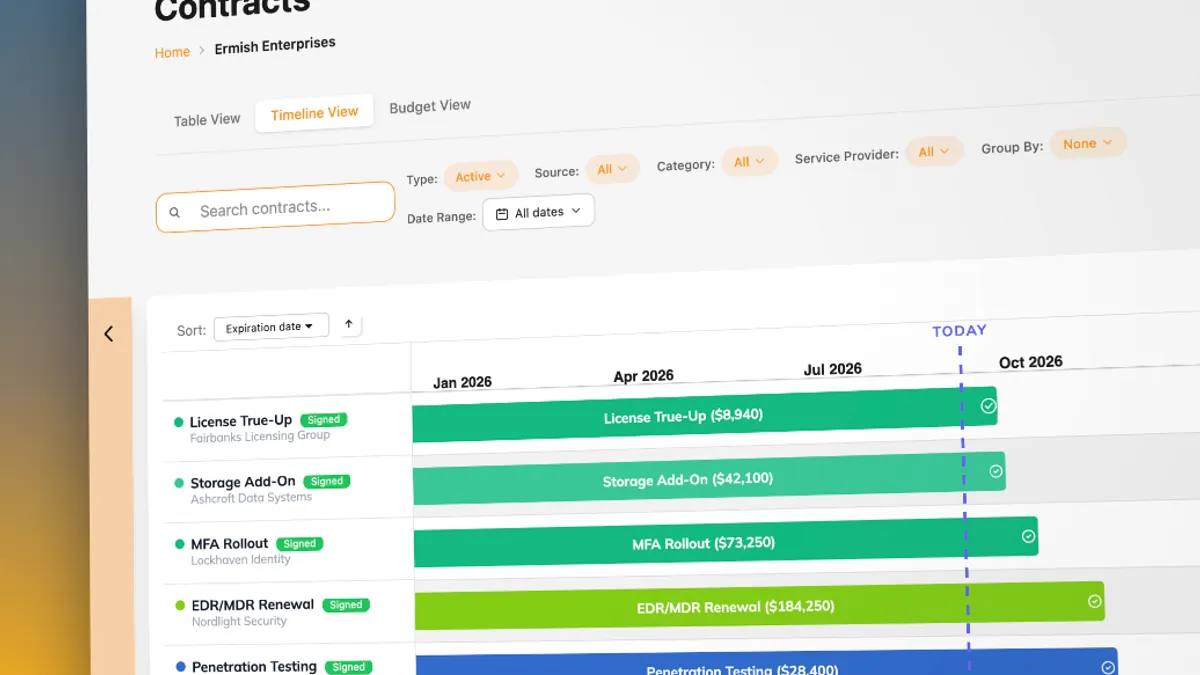
- Technology advisory firm Opkalla launched a new IT contract and renewal management platform Kallarity, the company announced at its annual Tech Summit Thursday.
- Kallarity entered beta mode after Opkalla tested the dashboard with 15 customers from May to September. The platform is available for free to all current and prospective customers attending the summit and will enter general availability in early 2027.
- The TA pitched Kallarity as a single repository for IT and telecom products, automatically ingesting vendor contracts and sending automated renewal reminders months in advance. “A lot of times the renewal is a piece of the sales process that gets overlooked whether it's intentional or not, and it often ends up in not so great of a situation for the clients,” Opkalla Director of Marketing Elizabeth Davis told Channel Dive.
Dive Insight:
Inventory management platforms have become strategic for Opkalla and other TAs that want to support clients through the full technology lifecycle.
IT buyers weigh vendor options at renewal time as incumbent providers yank up their prices. A recent survey by Telarus found that 84% of midmarket and enterprise purchasers are open to changing vendors. Despite the churn risk, many agents and resellers focus on the initial sale and walk away.
North Carolina-based Opkalla pitched the idea of a renewal management product to its customer advisory board last year and received an endorsement from board members, according to Davis.
The company used TypeScript programming language, the SvelteKit user interface framework and a PostgreSQL database to build Kallarity, and it hosted the platform on Microsoft Azure.
“It’s on our own storage, on our own code base and all of that good stuff,” said Dayna Grigsby, who was hired as AI product lead in June to integrate feedback from beta users and take Kallarity to the finish line. “It’s completely built ground-up.”
Opkalla is now working toward SOC 2 certification and will show customers the third-party assessor’s audit when it arrives, according to an FAQ. Users log on to the platform via Microsoft Entra and are subject to role-based permission to determine how much information they can see about accounts and contracts.
Grigsby said companies in Kallarity’s trial group differed widely on how and where they tracked contract end dates. Their strategies included multi-tab spreadsheets, SharePoint sites and nothing at all.
Kallarity automatically uploads contracts from vendors it already manages for the customer, but the platform can also track vendors new to the platform, which includes a Microsoft license portal.
“It's almost a real-time sync of all of our signed contracts, and if clients want to pull in any external contracts and additional things to track centrally, they can do so,” Grigsby said.
Opkalla is not charging for the dashboard, betting that the service will deepen its relationship with clients and subsequently complement the revenue it derives from its agency and reseller practices.
“There are other tools that might be similar to what Kallarity does, but if you were to buy it off the shelf, it could be thousands, even tens of thousands of dollars, depending on the size of your organization and how many contracts you're dealing with,” Davis said.