

AWS is putting $1 billion behind the hottest job in enterprise AI.
The cloud provider said Tuesday it is standing up a dedicated forward deployed engineering organization that will embed thousands of enablement specialists inside customer teams to build and deploy agentic AI systems. The move drops AWS into a scramble among the biggest names in tech to own a messy, lucrative job: getting AI projects out of the pilot phase and into production.
What separates the AWS approach is where its FDEs will sit. OpenAI spun its deployment muscle into a separately funded company. Anthropic built a services arm with Wall Street backers. AWS is keeping its AI squad inside the house.
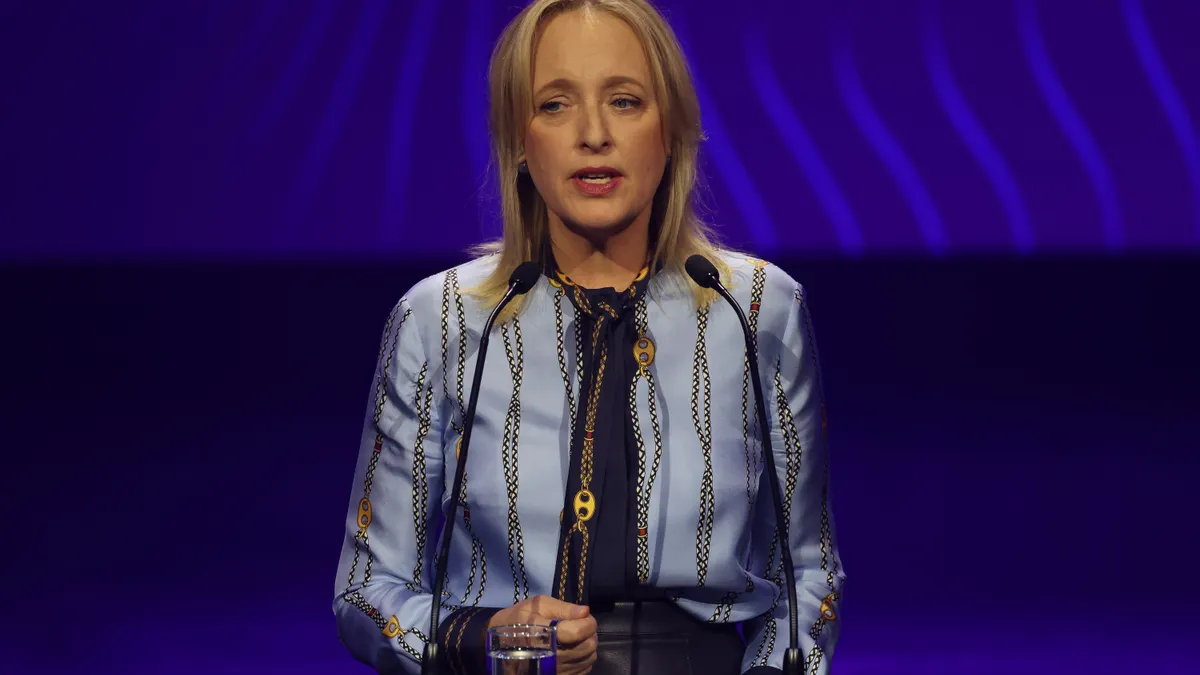
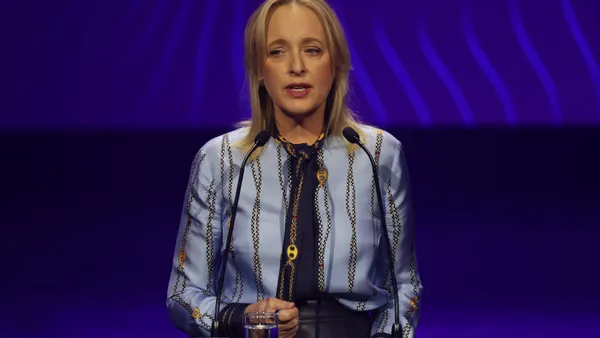
"This organization is a separate business unit within AWS, not a standalone company," Francessca Vasquez, the company's VP of frontier AI engineering and services, told Channel Dive.
The move reflects the steady evolution of AWS's work in machine learning and AI. In 2017, Vasquez said, the company created a machine learning lab, which grew into the Generative AI Innovation Center three years ago. AWS is now folding the innovation center team into an FDE unit built around an agent-first approach.
The promise to customers is threefold: deployments measured in days rather than months, engagements scoped around a business outcome rather than billable hours, and customers able to run the systems on their own once the FDE work is done. AWS organizes the FDE work in pods of five to six engineers, each paired with the agents it builds, on 45-day sprints.
The FDE frenzy
The investment lands AWS smack in the middle of a frenzied AI land grab.
OpenAI seeded a standalone Open AI Deployment Company with $4 billion and bought an engineering firm to staff it in May. Google Cloud pledged to hire an FDE army of its own and has put $750 million toward its partner ecosystem in May as well. Last month, Anthropic added a services track to its partner program and launched an AI services company with Blackstone and others. Salesforce started beating the FDE drum in March, promising to fund a team of 1,000 AI deployment specialists.
The FDE model is not new, but the rise of agentic AI has turned it into a recruiting war, and into real money. Omdia, a Channel Dive sister company, expects more than $1 trillion to flow through the systems integrator market this year.
The frenzy is a response to a problem the channel knows well: AI pilots often go nowhere. Enterprises run a proof of concept, decide it was interesting, and quietly shelve it. Research from MIT's NANDA initiative found that 95% of enterprise generative AI pilots produced no measurable business impact.
Vasquez contends that pilots fail when they’re not linked to a real business workflow. AWS isn’t making that mistake.
“We are maniacally focused on business end-to-end workflows,” Vasquez said, arguing that data strategy, security and governance have to be built in from the start rather than bolted on once a demo works. Proving an agent can automate a task, she said, is not the same as standing up a system a regulated business can operate.
For channel firms, the question then becomes: Is AWS setting the table for partners or eating their lunch?
Vasquez says the former. “We see ourselves as setting the table with them, and then being able to scale with them,” she said, adding that some partners will be able to reimagine their business models around the work.
Most customers already have partners in play, she said, and will want an integrated pod that mixes AWS engineers with partner talent rather than an AWS-only team. Part of the $1 billion is set aside to train partners on the company's methods, including an approach it calls AI DLC, or AI-driven development lifecycle.
Vasquez pointed to a sliding scale of partners that runs from business consulting and advisory firms and the big global integrators down to regional technology specialists and "AI-native" firms. Some that worked with the Generative AI Innovation Center, among them Caylent, Slalom and Quantiphi, are already on board, she said.
On a separate but parallel track, AWS has spent the past year courting strategy and advisory houses such as Bain, McKinsey and BCG through its invite-only Business Outcomes Xcelerator program, built on the same outcome-driven customer pitch now attached to FDEs.
For regional MSPs and VARs, time will tell whether FDE programs are built with them or around them. When asked about the on-ramp for those firms, Vasquez said first-party and integrated pods are the norm today. It's still early days but Vasquez said she could "envision" a future in which there may be cases where customers want a third-party-led engagement. "I don't think we're fully there yet," she said.