

Managed service providers are starting to ask vendors for market development funds, but identifying the right co-marketing opportunities is easier said than done.
The industry has seen an increase in market development fund demand. Kaseya approved approximately 1,300 MDF applications across its partner base this year, according to Greg Jones, the software vendor’s SVP of MSP success for EMEA and North America. Jones said Kaseya is getting the most applications it’s ever gotten, but 1,300 is still a small segment of its 40,000-plus partners.
It’s further evidence for the struggles with vendor co-marketing in the broader IT channel. Two in 5 channel partners say they fail to maximize MDF, according to recent research by Channel Dive sister company Omdia. For MSPs, which are often much smaller than the average channel firm and operate a unique business model, it’s difficult enough to ask for MDF in the first place.
“Do enough MSPs ask their partners for MDF? My answer would be no — not enough,” Jones told Channel Dive. “They should be asking theoretically all of their vendors for MDF. They should be looking to tap into all of the services that the partner offers to help them grow and scale.”
Florida-based MSP Tech Rage finally made the leap to utilize MDF last year. Co-founder and Chief Experience Officer Matt Rose reached out to his vendor partners and ultimately enlisted Kaseya to help pay for a variety of events and booth appearances. The partnership has cut Tech Rage’s marketing budget in half, Rose said.
“I don't know why everybody wouldn't be doing it,” Rose told Channel Dive.
But for years, Rose hadn’t been asking. He had been hearing from peers about MDF but he didn’t think the opportunity applied to him.
“I had heard about it for a long time in various peer groups and communities: ‘You should use MDF, you should use MDF,’” Rose said. “To be completely honest, we didn't do things that I thought required or qualified for MDF. We weren't really doing a lot of marketing and things of that nature, so I just didn't really know what to ask for.”
The reasons small MSPs don’t ask for MDF are myriad, but the obstacles frequently boil down to staffing and business models. The eligible firms often lack dedicated marketing personnel, forcing the business owner to take time out of their schedule to develop marketing campaigns.
“When you have at the very least a CMO in place, and you have a demand gen team or sales reps who are dedicated to your partnerships, or you have a function where they're spending some of their time and their energy on these partnerships, that helps tremendously,” said ExSailIQ 360 Co-Founder and Principal Growth Marketing Consultant Shaun Martinez, who has cut her teeth helping partners make the most out of resources available to them via the AWS Marketplace.
The MSP model is less product-led than value-added reseller or technology advisor models, where MDF assistance has been more common. As a result, MSPs traditionally weren't inclined to align so closely with vendors.
“MSPs feel like they can do it,” Martinez said. “They just have too much going on to actually sit down and build out joint marketing and joint co-sell plans.”
The vendor problem
An MSP asking doesn’t mean a vendor will answer.
Rose said that when he asked his vendors for MDF, most of them didn’t actually want to help with events aside from gift certificates and swag. For all the noise about reaching out to vendors, Rose remains dubious.
“Kaseya has been fairly known now for a while to do the MDF, but if there's other vendors out there they don't do a good job talking about it. Even for those vendors that are saying, ‘No one's using it,’ their account reps probably aren't telling anybody about it.”
Some of those do offer MDF burden MSPs with red tape and requirements, according to Jones.
“You will see their MDF processes are like War and Peace; it's over 20 to 30 pages,” he said.
According to Jones, Kaseya insists that MDF requests be submitted at least 45 days prior to an event. The company also needs to know the cost, the expected number of attendees and what success looks like for the partner, he said. It’s designed to ensure the partner has carefully planned the event.
“It's not us being mean or anything, and ultimately we have deep pockets as a vendor,” Jones said. “If an event isn't executed really well or doesn't deliver in our line, for Kaseya that's not the end of the world. However, we understand from a partner point of view that could mean everything, or it could leave a bad taste around MDF.”
Martinez pointed to several well-known vendors that offer substantial MDF, including AWS, Intel and Splunk. A new generation of up and coming vendors, however, is itching to collaborate closely with partners and — most importantly — fund them.
“Partner marketing [is] a really underfunded piece of a business, but with everybody wanting to do through-partner and with-partner engagements, I think these vendors are starting to get it and get into it,” Martinez said.
Finding the right fit
The services-led MSP model keeps some partners and vendors from working together.
Tech Rage partners with numerous software vendors, but it may not layer a given vendor into its service offering for a given customer.
“If [Cyberfox] gives me money, they can't be guaranteed that my Password Boss spend is going to go up,” Rose said.
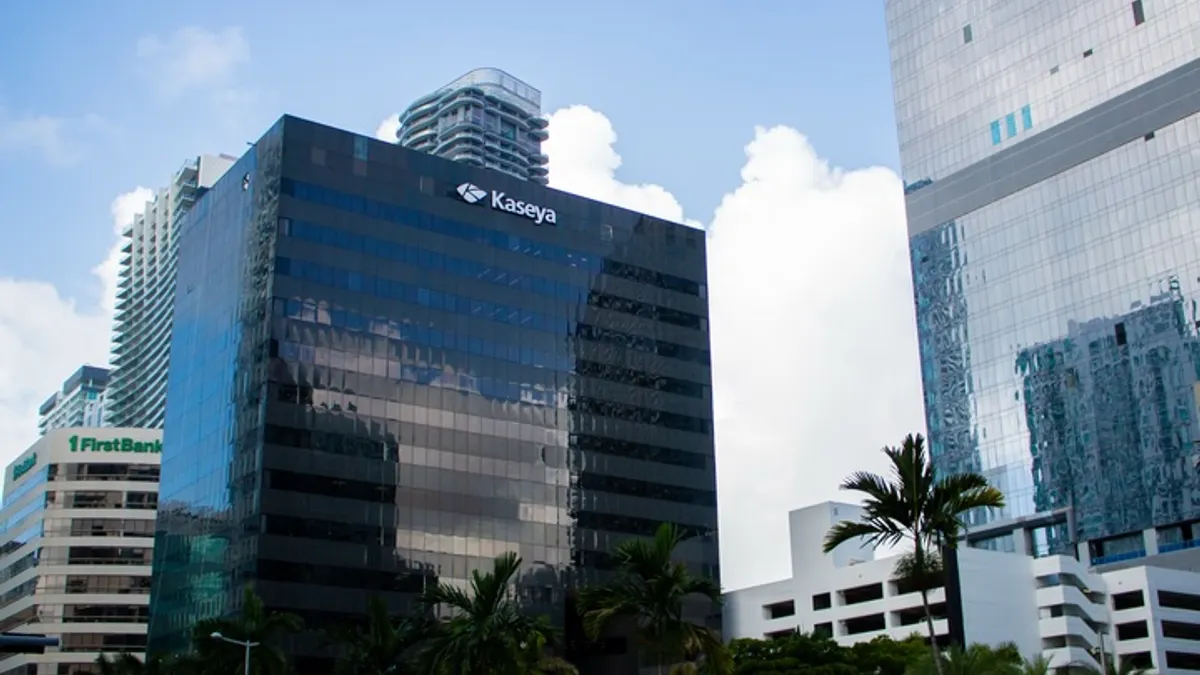
Kaseya is different because it is the IT service management platform beneath Tech Rage’s services. As long as the partner’s account with Kaseya grows, the MDF will keep coming. While Kaseya has packages to send speakers to partner events, Jones said the company ultimately doesn’t care whether Kaseya gets mentioned.
“I'm selling Tech Rage; I'm not selling a product,” Rose said. “Kaseya is basically investing in Tech Rage, and they're just trusting that we're going to stay a partner with them.”
Tim Conti, VP of strategic Alliances at managed security service provider RedHelm, has found a similar strategy partnering with the underlying tech provider for MDF. Then RedHelm goes a step further by bringing sales-focused channel partners.
“A provider like an N-able gives us MDF, we do a joint customer event, and I'll invite a technology advisor,” Conti said. “Why not? We're doing one in Denver soon, and there are three TAs off the top of my head that are right in Denver, and there's really no competition there.”
Multi-vendor events are also possible if people carefully chart out their swim lanes. RedHelm, for example, got MDF funds from a fiber provider to host a security seminar. It’s also bringing in secure access service provider Cato Networks. Conti said security-minded companies complement one another.
“Cato's got a really great SASE solution, but we're taking the approach of being the offensive security, trying to hack into a client's environment with some real-world stuff,” Conti said.
The average TA is small and understaffed in marketing. Martinez said MSPs could take a page out of TAs’ book when it comes to MDF.
“They're always sniffing around, asking, 'How can I most strategically optimize my resources?’” Martinez said.
For all the talk of AI governance, cybersecurity and other technology-focused concerns, Jones said sales and marketing remains one of the most vexing challenges for MSPs. The fastest growing partners in Kaseya’s community are the ones who proactively focus on commercial activity.
“First and foremost, you are a go-to-market business,” Jones said. “The technology tools and services are important for the service delivery, but that will always be evolving.”