Dive Brief:
- Device refreshes create security gaps many organizations fail to address, according to a recent Blancco Technology Group report. The data sanitization services company commissioned Coleman Parks to survey nearly 1,500 compliance and sustainability leaders in the public and private sectors.
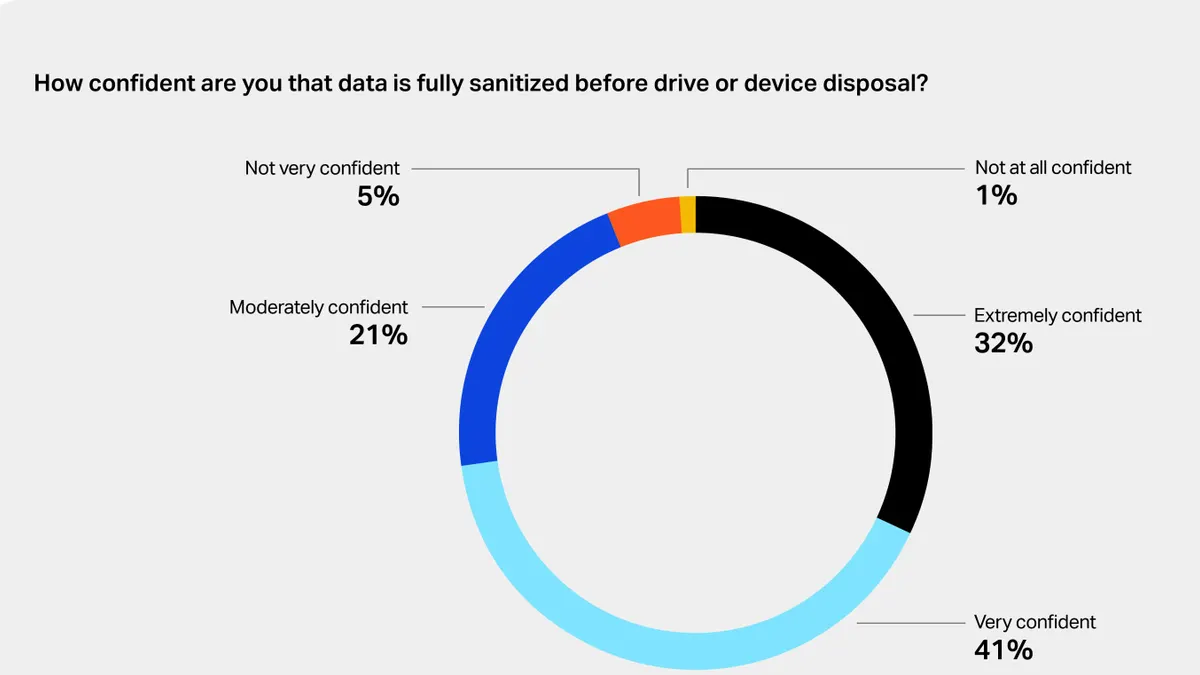
- While 94% of respondents expressed confidence in end-of-life data management practices, more than one-third of the surveyed organizations experienced data leaks in the last year. One in eight of the breaches was tied to sensitive data left on redeployed devices or drives.
- Organizations need data cleanup help, Tzvika Shahaf, SVP of Product Strategy at Blancco, told Channel Dive. “Hundreds of thousands of assets are being decommissioned and changing hands,” Shahaf said. “We’re seeing a lot of sentiment from large enterprises looking for channel partners to ensure that they’re compliant and secured.”
Dive Insight:
Data sanitization service providers routinely help companies wipe sensitive data when drives and devices are decommissioned for replacement or retirement. Too often, data slips through the cracks.
“There’s a gap between how confident people are about data wiping and the reality,” Shahaf said. “It’s primarily about the magnitude of data. We’re living in an explosion of data assets within almost every organization, and these companies frequently want new infrastructure, new storage technologies, new standards and that means replacing old devices quickly. ”
To help prevent lapses, Shahaf says that organizations should implement data sanitization as early as possible in the chain of custody.
The Blancco report highlights how evolving data protection frameworks and regulations are shaping the way organizations manage their end-of-life data management. In 2025, nearly 60% of organizations increased spending related to data privacy and protection compliance compared to the previous year, per the report.
In the U.S., organizations grapple with an average of 2.9 data privacy frameworks, including the California Consumer Privacy Act, the Health Insurance Portability and Accountability and state breach notification laws.
The pace of change has added to the challenge. AI has sped up device refresh cycles and system updates. Among survey respondents, 90% said they had deployed Al in the past year, and 99% in that group destroyed drives or devices as a result. Technology solutions providers like NWN have launched network-as-a-service offerings, while technology distributors such as TD Synnex are logging record revenues from hardware refresh services.
“So many organizations are upgrading their legacy systems with AI-supporting technologies,” Shahaf said. “We need to make sure as systems are changing that data is being managed properly. AI growth brings the need for more structured data sanitization solutions.”