


Many channel partners that previously bought direct from vendors are now being told to work through IT distributors instead.
A domino effect of partner rationalization is spreading through the channel, analysts and partners said Wednesday at Canalys Forum Americas. Partner rationalization is a term for a vendor canceling its agreements with resellers and instructing them to work underneath a larger reseller or distributor. Channel partners are seeking "tier two distribution” arrangements, and distributors are absorbing more responsibilities for partner training and sales enablement.
VMware by Broadcom leaned heavily into rationalization earlier this year, removing its lowest partner tier and significantly trimming the rolls of its cloud services provider program.
Now Microsoft is making a move to intermediate its partnerships.
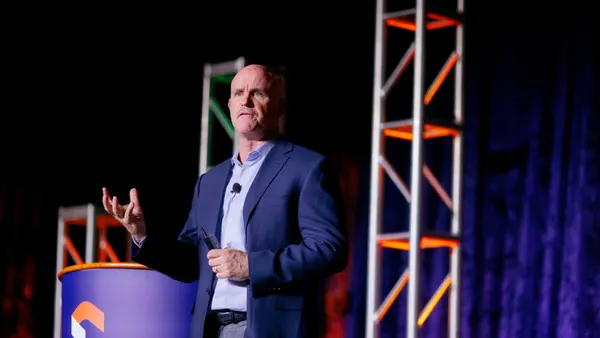
“You might have recognized a couple of weeks ago, Microsoft cut two-thirds of their global distributors,” Omdia chief analyst Jay McBain said in his keynote speech on Wednesday. “They moved from 180 global distributors to 60. A week later, they chose five companies only to integrate with the Microsoft marketplace: TD Synnex, Ingram Micro, ArrowSphere, Crayon and Pax8. This is a consolidation. This is a platform play around distribution.”
Allison Hughes, Microsoft CVP of global SMB, told McBain in an onstage interview that Microsoft is trying to deepen the skill sets of its partner base, particularly as customers request guidance on AI. Microsoft has not reduced any of its investment in partner support, Hughes said.
“We want to reward our partners that make investments in deep expertise that are going to be able to guide our customers on this journey moving forward,” Hughes said.
Partners and analysts tell Channel Dive that the trend goes beyond Microsoft and VMware.
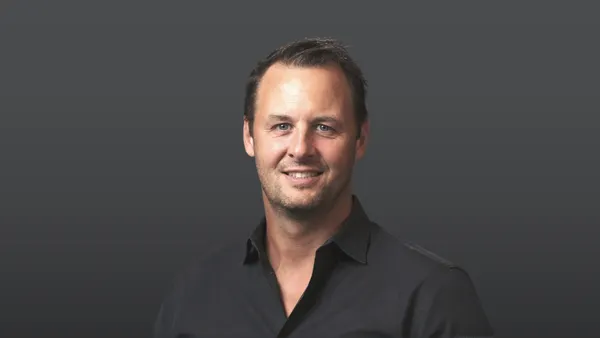
“Based on what I'm hearing, I think they are not the last ones,” TD Synnex CEO Patrick Zammit told Channel Dive. “There's more to come.”
Those vendors include Dell and “many, many” others, Zammit said.
North Carolina-based partner Opkalla is among the partners being told to move to tier two.
"We have a vendor who just approached us, with whom we do millions of dollars in a resale motion. They would send us a quote directly. They are now asking us to move to traditional distribution like Ingram Micro and TD Synnex,” Opkalla co-founder and managing partner Jim Campbell told Channel Dive.
Distributor perspective
Zammit said TD Synnex views the vendor as a customer when the vendor transfers a partner. The number one request of the vendor is to secure the business, Zammit said.
“You need to develop a safe transition plan for the vendor with the partners, and that's the approach we've taken consistently,” Zammit said.
Omdia GSI practice leader Peter Bryant predicted that 20% of distributors will be acquired, merged or close their doors by 2028.
Zammit said the percentage could be even higher, given that many smaller distributors operate outside North America. In the more mature North American distribution market, consolidation will “absolutely” continue.
“A lot of distributors have disappeared. It's good news for us. Good news for the survivors, if I can speak like that, and unfortunately, this trend is going to continue,” Zammit said.
Disclosure: Informa, which owns a controlling stake in Informa TechTarget, the publisher behind Channel Dive, is also invested in Canalys and Omdia. Informa has no influence over Channel Dive’s coverage.