

Channel partners are turning to energy and power solutions to capitalize on the flood of AI services and data center spending.
Energy integrator and distributor Abundant IoT grew its supplier portfolio 35% in 2025, enlisting an arsenal of renewable and off-grid energy providers. Abundant IoT is pairing those vendors with historically telecom-focused brokers, who are cross-selling energy to their clients and using energy as a Trojan horse to gain access to data center accounts.
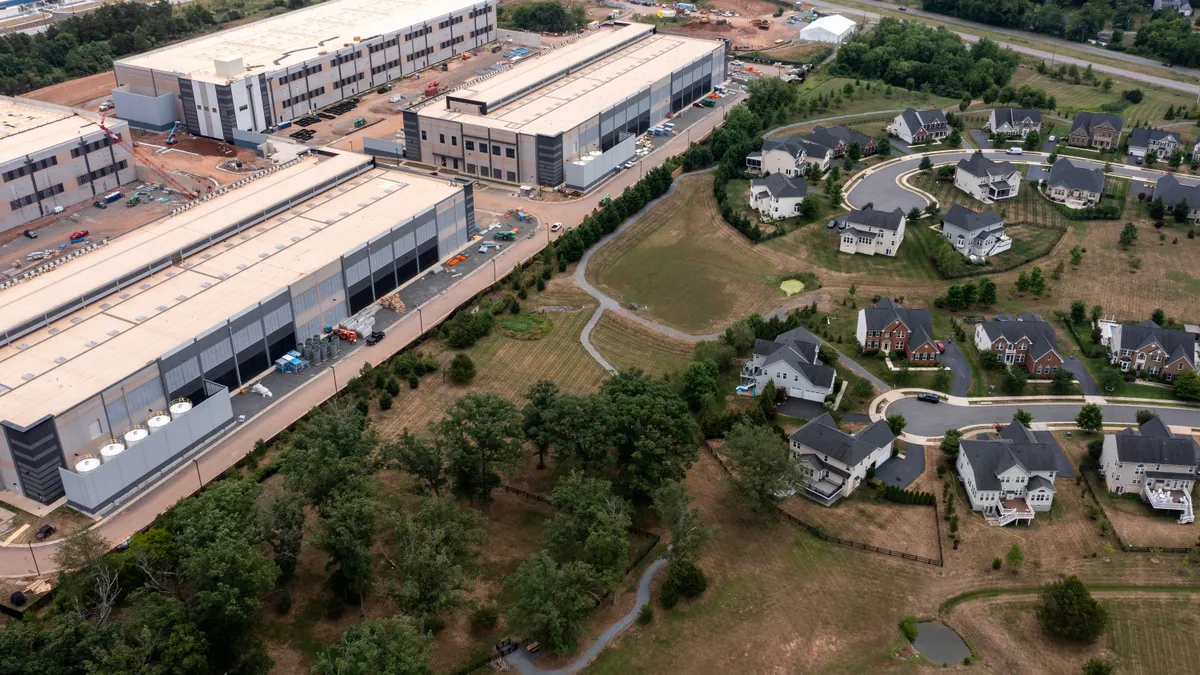
Data center providers and real estate investment trusts are hungry for power, as infrastructure buildouts geared toward AI workloads drive rising demand. The International Energy Agency estimates that electricity demand will grow 40% through 2035. As mass investments in data center infrastructure circumvent traditional channel sales, some partners are seeing a revenue lane through brokering and reselling energy.
“The power crisis conversations we've been having has been really unpacking a new channel,” Abundant IoT Co-founder and CEO Vince Bradley told Channel Dive. Bradley said the five-year-old company grew its revenue 15-fold in 2025, after seeing significant interest from the technology service distributors to market its services.
Bradley has a reputation for bridging the TSD and technology advisor market with energy providers. Bradley’s former TSD WTG was one of the first TSDs to break ground into energy. After selling WTG to AppDirect in 2019, Bradley led AppDirect’s energy division. He founded Abundant IoT in 2021 with a goal of helping TAs earn residual commissions on IoT equipment. Much of that equipment helped businesses save on energy bills, including LED lighting, water harmonics and air filtration.
Additional lanes in energy have opened for TSDs and TAs in recent years. AppDirect has acquired two energy brokerages in hopes that energy brokers will add telecom and SaaS to their revenue streams and TAs will add electricity and natural gas.
Bradley similarly sees cross-selling opportunities. A TA working to renew cloud and telecom contracts with an enterprise recently used energy sales to differentiate itself against technology-only companies. The total deal added up to a $15 million contract.
“The stickiness is amazing. When you upsell the other big utility to a client, your value goes way up. It just goes through the roof,” Bradley said.
Abundant IoT’s latest push targets the strained power grid. The company has assembled wholesale contracts with renewable fuel cell providers such as Bloom Energy. Bradley said hyperscalers are stacking up fuel cells and linear generators to increase their power capacity and meet their sustainability goals. Sales of linear generators have proliferated as diesel-run generators prove more costly and complex to deploy.
“The data centers are buying the fuel cells like hot cakes right now,” Bradley said. “We're in a great position right now. We can't get there fast enough. We're doing deal registrations left and right, and just trying to get our relationships locked in.”
Many TAs dabble in the data center business, but mostly by selling connections and colocation space inside data centers. In the push to provide fuel cells and linear generators, Abundant IoT and its TAs are now selling directly to the data center operators and REITs.
“You sell the space and the power, but when you're selling that power — how about fries with that?” he said.
Bradley said Abundant has, in multiple cases, displaced energy service companies such as Schneider Electric. That’s partly because Abundant isn’t charging large consulting fees or marking up the products it sells.
“In that situation, you're paying them half a million bucks for compliance information in their portal, and they're marking up your procurement,” Bradley said.
In other cases, Abundant has forged relationships with ESCOs to resell their services.
Even as political winds shift, many companies still see a connection between sustainability and lower operational spending. Only 7% of companies have deprioritized sustainability, according to an IT enterprise insights survey conducted by Omdia, a Channel Dive sister company.
“There's a clear partner opportunity here for those with capabilities to advise customers on low-carbon IT environments — and a major opportunity for partners who can deliver ITAD services in a secure and certified manner,” Omdia Senior Analyst Ben Caddy wrote.
The nuclear option
Abundant IoT is also creating the scaffolding to deliver nuclear energy to data centers.
Bradley said nuclear energy is growing safer and cleaner. Although studies have suggested that small modular reactors produce more waste than their predecessors, Bradley and leadership at companies like Moltex Energy and ARC Clean Technology argue that SMRs can recycle their waste.
“I like to talk about nuclear as sort of the long-term direction for the whole power space,” Bradley said.
However, the vendor landscape is still developing for SMRs. Many of the vendors that say they provide an SMR are merely reselling one.
"We've said, 'Okay, here's all the mature SMR motions that are going on out there.’ We're setting up a path for our customers within those, because the SMR motion is very new,” he said.