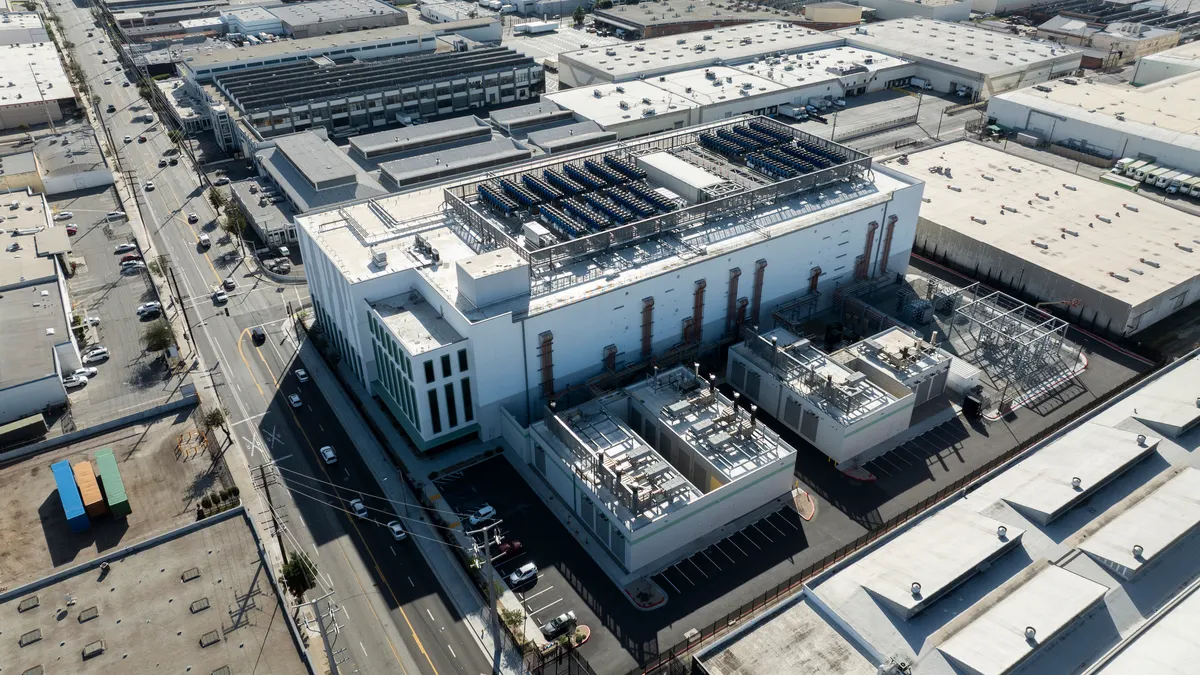
An AI-fueled data center buildout is driving unprecedented demand for energy. By 2050, data centers will account for up to one-third of commercial building electricity use in the U.S. As the decade closes, global electricity consumption by data centers is expected to grow 15% per year, more than four times faster than all other sectors.
The electrical equipment market is experiencing a concurrent boom. By 2030, the sector is projected to surge from $20 billion to $65 billion, according to research and consulting firm Wood Mackenzie.
Data centers will likely define the future of the electrical equipment industry, just as AI is reshaping compute architectures.
Just six years ago, data centers captured under 2% of the U.S. electrical equipment market, per the report. By 2030, Wood Mackenzie researchers estimate the massive, energy-intensive facilities will seize up to 40% of total demand.
“We're going to see this rapid influx of data center capacity coming online over the next two years or so,” Ben Boucher, senior analyst at Wood Mackenzie, told Channel Dive. “That will put pressure on the underlying supply chains, but also on power infrastructure, electricity generation and transmission and distribution as well. It's a perfect storm of constraints predominantly driven by data centers.”
Record market expansion threatens to trigger a supply chain crisis.
Transformers, which adapt power from the utility grid for servers and data center infrastructure, are a critical bottleneck for the electrical equipment industry. Lead times have stretched up to three years for large-scale power transformers, Boucher said, and prices have skyrocketed by 50% for large transformers and over 100% for smaller distribution transformers used for everyday consumption.
The scale of electrical equipment required to meet the planned data center boom is staggering, Boucher added. Transformer demand will multiply sixfold by 2030, while panel board and switch manufacturing will also need to ramp up exponentially.
Labor shortages and capital requirements are other looming constraints. Boucher said that fewer young people are entering manufacturing, creating a skilled worker deficit. New manufacturing facilities also require billions of dollars in investment and several years to become operational.
At the same time, some manufacturers are concerned whether demand for data center gear will endure.
“Some of the original equipment manufacturers have concerns whether the demand levels are going to be sustainable,” Boucher said. “Is this data center boom going to be a short-lived bubble?”
Electrical components distributor Arrow Electronics saw its global components segment revenues increase 39% year-over-year to $6.6 billion in this year’s first quarter, Jon Watters, a spokesperson for Arrow, told Channel Dive over email.
Watters tied the growth to boosts in “supply chain activity to furnish electrical equipment supporting AI data center buildout and expansion.”
For channel partners, the traditional commercial and utility customer base will likely continue seeing growth as aging infrastructure modernizes, Boucher said. The challenge will be navigating supply constraints and potential price pressures as data centers compete for the same limited equipment pool.