

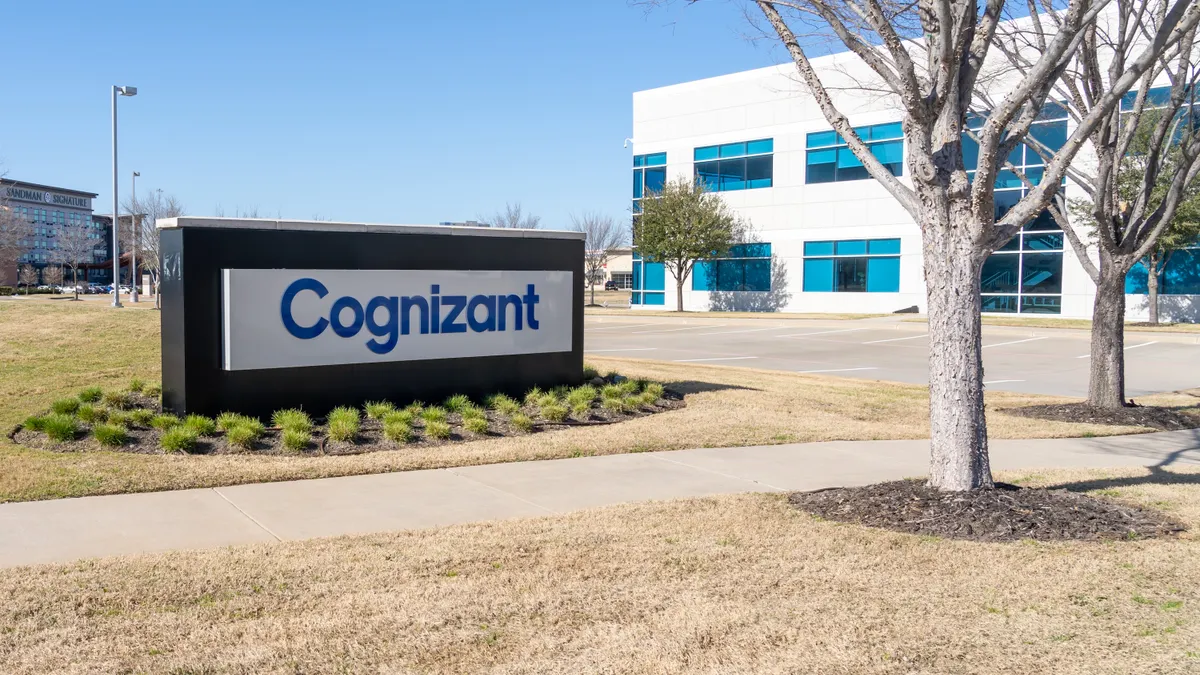
Cognizant is in rebuilding mode this season. During Wednesday’s second-quarter earnings call, CEO Ravi Kumar spent most of his time on the “AI velocity gap” — the distance between what AI can already do and the value companies are getting from it.
Company research shows two-thirds of the Global 2000 have yet to see measurable AI productivity gains and one in four have paused deployments, Kumar said. "The key question," he told analysts, "is why growing AI capability has not yet translated into more enterprise value."
Kumar’s explanation is that the market has moved into a new phase. "The first chapter of AI adoption was broad-based, open-ended, experimental," Kumar said. "The technology was magical." Now clients are asking a blunter question. "I'm spending a lot of money on tokens. I'm spending a lot of money on the entire AI stack. Am I getting the value?"
The answer is no longer in the models themselves but in the applied layer: the context, governance and business processes where AI has to actually work, he said.
To sell that, Cognizant launched what it calls an AI delivery operating system, built around "context engineering" and internal tools meant to coach engineers and embed AI into operations. It's the same case Kumar made at the company's June AI Forum in New York, where he outlined a $1 trillion system-integration market expanding into a $5 trillion to $6 trillion opportunity as AI moves from writing software into running business operations.
AI wins and mixed messages
Cognizant says more than 40% of its software development is now AI-assisted and it has over 8,000 active AI engagements. For one North American bank, Cognizant built a pilot for fraud disputes and know-your-customer workflows — the identity and anti-money-laundering vetting banks are required to run. The company says its pilot cut manual effort by more than 50%.
Cognizant’s TriZetto healthcare platform, which brings in more than $1.1 billion in annual revenue as it grows faster than the company overall, is the blueprint Kumar wants to follow across industries. About half a trillion dollars of claims already run through the TriZetto platform. Last week, Kumar said, Cognizant made TriZetto "headless," exposing its rules and guardrails so AI agents can access them directly rather than through screens built for people. He said the clients filing claims also have roughly $4 trillion of administrative work sitting outside of TriZetto, and headless access lets Cognizant use the platform's trusted logic for that work, too.
That’s the big-picture potential. The financial results, however, are sending mixed messages.
The company’s revenue rose 4.5% to $5.48 billion year-over-year, while financial services grew nearly 12% for a second straight quarter. Adjusted operating margin widened to 16%, and its stock climbed more than 10% during the last 24 hours.
As of Wednesday, Cognizant cut its full-year revenue outlook to 4%-5.5% growth, from the 6.5% ceiling it set in April, citing cautious discretionary spending. Its second-quarter bookings fell 6%, and GAAP net income slipped to $636 million from $645 million even as the company raised its earnings guidance, propelled by $1.1 billion of buybacks.
Cognizant is selling itself as the fix for a slowdown that is starting to show up in its numbers. "Business operations is where the future is," Kumar said.
We’ll soon see whether his clients agree.