As enterprises spend heavily on technology to power growth, the premium rises on channel partners' technical expertise, product knowledge and integration skills. Emerging AI capabilities and the potential of quantum computing represent opportunities for providers to bridge the gap between cloud and customer, use case and user base.
Big Tech, too, depends on the teeming ecosystem of providers that populate the channel. These firms sell and deliver the digital transformation, data modernization and cloud migration initiatives that are driving IT spending into the stratosphere.
Gartner expects aggregate information technology spending to increase nearly 10% year over year and surpass $6 trillion for the first time in 2026. While AI-fueled investments in software and data centers are leading the growth spurt, IT services remain the largest spend category, accounting for almost one-third of total projected spend next year.
At a granular level, ripples from the channel become more visible. Despite waves of economic uncertainty, IT outsourcing contracts with an annual value of $5 million or more increased 18% during the third quarter to nearly $33 billion, according to ISG research published last month. Managed services accounted for roughly one-third of the total contract value, bolstered by 22% year-over-year growth in the Americas.
“Mega deals are stable and smaller deals are growing again,” Steve Hall, ISG president and chief AI officer, said in the report. “This tells us enterprises are moving ahead with both large, transformation-led programs and more targeted modernization efforts — often tied to AI and automation.”
The channel is also grappling with changes in pricing models and partnership arrangements. A steady shift to SaaS-based, pay-as-you-go technology services is now competing with a growing interest in outcome-based billing.
Some of the largest software providers, including SAP, are leaning on partners to help bring customers to the cloud as rapidly expanding hyperscaler marketplaces open new sales avenues. Other industry giants — Microsoft, Broadcom and Cisco, to name three — are retooling their partner ecosystems in ways that present both challenges and opportunities.
...enterprises are moving ahead with both large, transformation-led programs and more targeted modernization efforts — often tied to AI and automation.

Steve Hall
ISG president and chief AI officer
Here are several of the salient trends we’re tracking as they shape the business of technology and the technology that fuels business.
Big Tech retools channel partnerships
The largest technology providers are revising the rules of engagement for thousands of channel partners. While the changes have caught some partners flat-footed, the “new” direction is a return to the two-tier distribution channel model of yesteryear.
Two-tier distribution was how channel business got done in the 1980s and into the 1990s, when many partners were hardware and packaged software resellers. Smaller partners sourced physical products through tech distributors, which served as intermediaries between the multitude of channel businesses and large technology vendors. Large channel partners, conducting high-volume business, worked directly with manufacturers.
That setup began to change during the dot-com era, when e-commerce began to disintermediate traditional tech distributors. Soon after, the rise of cloud computing virtualized products and the distribution channel.
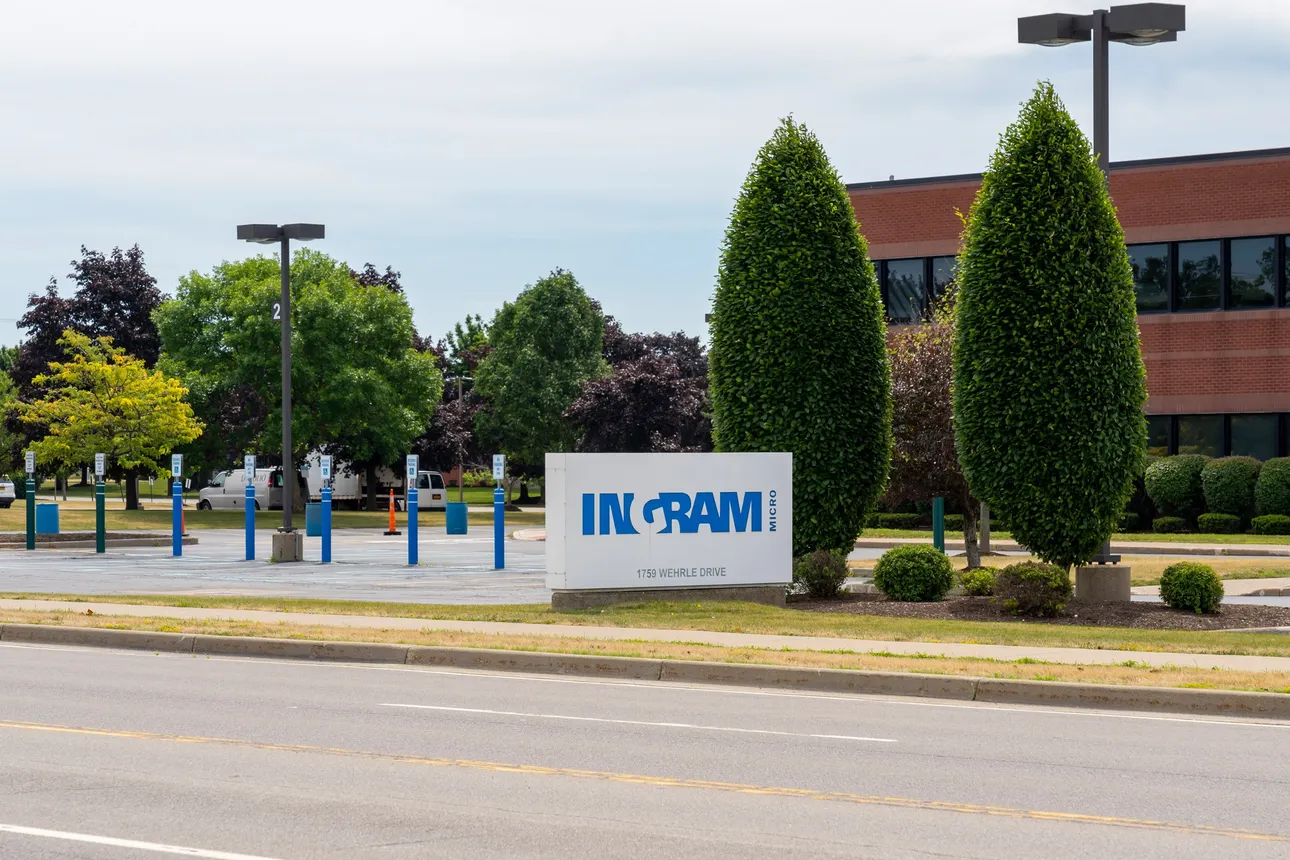
Tech vendors, however, are reasserting the old channel hierarchy. Microsoft’s revamped Cloud Solution Provider program, which went into effect last month, hiked the annual revenue threshold for direct partners from $300,000 to $1 million. This shift will likely drive many companies currently working with Microsoft directly to partner with cloud distributors such as Ingram Micro, Pax8, Sherweb and TD Synnex.
Other large vendors are expected to encourage channel partners with direct agreements to conduct business through distributors. Those moves could surface next year as technology providers roll out 2026 partner programs. Cisco, for example, will launch its retooled partner program in February.
Partners eye a mid-market AI consulting gap
Channel partners that provide consulting and services for AI see a major land grab in the often overlooked mid-market, where organizations with revenues in the $10 million to $1 billion range sit.
The largest system integrators and professional services firms are landing enterprise customers, but they’ve left a significant down-market gap. Midsize organizations are eager to implement AI without having to cut through enterprise-grade red tape. Yet these organizations aren’t on the radar of the large SIs and are looking for more affordable providers regardless.
The dynamic has created an opening for smaller consulting firms, managed service providers, technology advisors and value-added resellers to spearhead AI projects.
"We're talking to some [partners] about this,” Shezan Kazi, Dialpad’s head of AI transformation, said. “Not everybody wants to work with a Capgemini or with an Accenture. A lot of these companies need more specialized, accessible partners to work with.”
A shift away from per-project fee structures to outcome-based pricing has helped pave the way for AI adoption across the middle market.
When Insight Enterprises acquired AI-focused service provider Inspire11 in October, the companies signaled that fees will rise or fall with the business value generated by its projects.
“We put skin in the game by offering every client a risk-sharing opportunity. In these engagements, a percentage of our fees are at risk and we share in the long-term strategic value created,” Inspire11 CEO Alban Mehmeti told Channel Dive in an email.
Service providers chase AI efficiency gains
Use-what-you-sell — a channel strategy for decades — is resurfacing in AI.
Partners are eager to sell the technology to customers, but they’re also tapping the AI to boost in-house operational efficiency and improve service delivery. It’s all about eating one’s dog food or drinking one’s champagne, depending on metaphorical preferences.
Accenture, which ended its 2025 fiscal year with $69.67 billion in revenue, is representative of the trend. The professional services firm’s GenWizard generative AI platform is driving efficiencies, resulting in increased bookings, Julie Sweet, Accenture’s chair and CEO, said during a September earnings call. The company’s external customers for the platform include Lion, PHC Group and Unilever.
Employing AI in-house lets Accenture serve as an example of adoption when pitching the technology to customers.
“We're able to show them how we're doing it, and then help them do it in their business,” Sweet said.
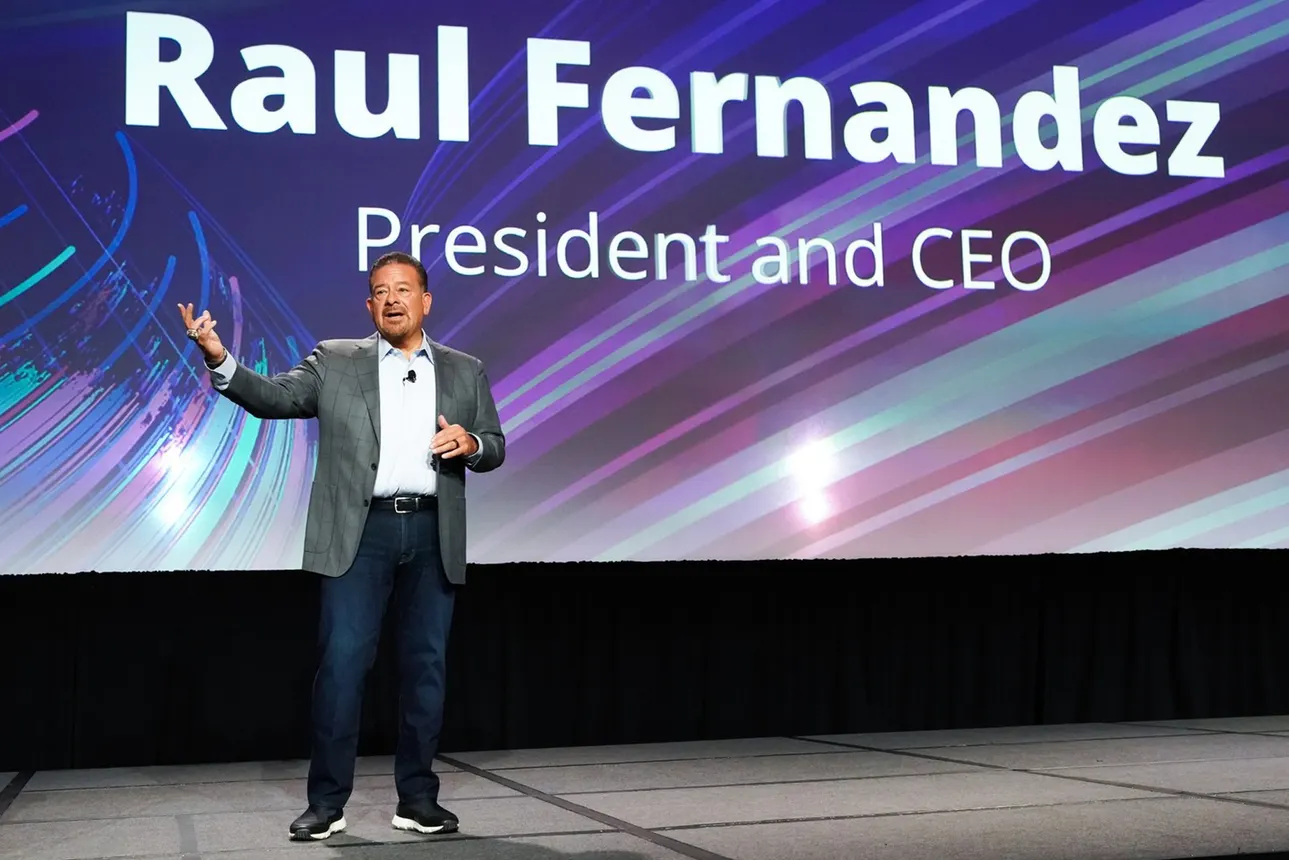
Service provider DXC Technology is also deploying AI in its operations. The firm has several in-house use cases in production to boost developer productivity, automate service desk support, provide predictive analytics in HR and improve forecasting speed and accuracy in finance, Raul Fernandez, the company’s president and CEO, said during a July earnings call.
“Internally, we are embedding AI across all corporate functions,” Fernandez said.
He added that such hands-on experience helps DXC offer more scalable AI offerings to its clients.
Sales-focused partners roll out professional services
Channel partners are adding service capabilities in response to margin pressure and client demand.
Large vendors are further driving partners into the professional services business by discontinuing their own offerings. Broadcom ended years of conflict between partners and VMware’s professional services group earlier this year, leaving the bulk of the service operations to its partner ecosystem. OEMs say that partners are better service providers and some have told Channel Dive that services are a low investment priority.
For partners, particularly those focused on product transactions, the shift is a business opportunity.
Pervasive commoditization, from PC hardware to cloud communications, has brought partners to a crossroads: either increase sales volume or add new revenue streams. Attaching professional services to products they already sell has been a simple tuck-in.
Distribution giant TD Synnex recently noted in a study that value-added resellers are lagging behind professional services firms. Zoom channel executives have said the company wants to reward partners that implement and manage the products they sell.
Value-added reseller ePlus is another example of the trend. The company expanded its vendor-specific services for Juniper Networks in September.
Although technology advisors have historically offered their procurement services for free, they’ve noticed that charging for ongoing services deepens their relationship with clients and affords new opportunities for transactions.
"It helps us provide more resources for the customer, obviously, but it also protects us and keeps a lot of our competitors out of our accounts,” Jake Jansen, CEO at Lava Technology Services, told Channel Dive. “Because the customer says, ‘We’re already paying Lava for this service. We might as well do the UCaaS evaluation with them or the colo evaluation.’”
Cross-selling becomes paramount
Channel partners are selling new products into existing client bases, out of convenience and to ward off an existential threat to their businesses.
Cross-selling makes sense for many business owners as they weigh the costs of new customer acquisition, despite the added staff and training needs. As lead generation becomes more challenging, partners are seeing the value in adding products that appeal to customers already on the books.
“Every time an advisor adds a category, they typically sell on average two to three times more than those who don't,” AppDirect COO Renée Bergeron told Channel Dive.
Historical lanes between partner types are blurring as providers expand their portfolios. VARs no longer confine their focus to hardware; MSPs now offer services far beyond the traditional help desk; and TAs have moved out of the telecom silo. All three are competing for software and AI revenue in the same customer accounts, aiming to become a client’s single trusted advisor.
Distributors and marketplaces are also actively promoting cross-selling among their partners. AppDirect is training telecom agents to sell software services and energy; ScanSource is recruiting specialized barcode VARs to sell mobility and unified communications.
“We believe you need hardware, software, services and connectivity to put it all together,” ScanSource CEO Mike Baur told Channel Dive.

Quantum cryptography flows into the channel
Security is proving to be the first major market for quantum computing among IT service providers.
Widespread enterprise use of quantum technology could be years away, with early adoption clustered in scientific high-performance computing centers. In the meantime, organizations face the threat of quantum computers able to break classical encryption algorithms. The field of post-quantum cryptography aims to develop systems that can block attacks staged from quantum computers.
The security window remains open. A transition to quantum-safe algorithms could take several years. However, there’s no consensus on when quantum computers capable of breaking encryption will emerge.
Against that backdrop, consultants and system integrators are developing practices and forging technology alliances to help clients adopt quantum-safe algorithms.
Accenture, Booz Allen Hamilton, DXC and Unisys are among the better-known service providers offering PQC services. Accenture’s venture capital arm earlier this year invested in QuSecure, a post-quantum cybersecurity software company.
PQC service providers could find themselves in a fast-growing sector. In October, MarketsandMarkets forecast a robust 46.2% compound annual growth rate for the PQC market to grow through 2030.
Visuals Editor Shaun Lucas contributed to this story.