


Small channel partners face intensified threats in 2026 as vendors demand increased scale and services.
As IT and telecom providers undergo mass consolidation, the partners that sell and service their wares are moving in parallel. Major vendors have spent the past two years overhauling their partner programs, typically with AI as the stated justification, but consolidation as the actual endgame.
The message to smaller channel partners is increasingly blunt: get bigger, add services, or get out of the way.
It’s a platform world, and partners are just living in it, Omdia Chief Analyst Jay McBain told Channel Dive. “You've got to look a little bit more like Accenture and a little less like CDW,” McBain said.
Translation: reselling boxes won’t cut it anymore. The platform giants that dominate SaaS, cybersecurity and cloud want partners that can implement, integrate and manage — not just move product. These companies, like the big three public cloud providers, think about resale differently and put a higher premium on partner services.
This isn't theoretical. It's happening now, and the fallout is measurable. Channel Dive is tracking five key areas where the squeeze is most visible.
Broadcom and VMware: the never-ending trickle-down effect
Broadcom’s 2023 acquisition of virtualization giant VMware continues to send ripples through the channel.
Partners of all kinds have felt the impact of VMware massively consolidating its partner program following the acquisition. Small value-added resellers and managed service providers have particularly struggled, with VMware eliminating its authorized reseller tier and excluding thousands of cloud service providers.
Moving to a competing platform like Nutanix is possible but rare, 11:11 Systems Chief Revenue Officer Dante Orsini said.
“For 15 plus years, [VMware] has been the de facto standard platform,” he said. “So you can't expect the market to react within a couple years and deliver a multi-tenant platform that's going to be capable from a security and from a scale perspective.”
Disenfranchised partners are facing unpleasant choices. Some are partnering with larger VARs and CSPs to continue their revenue stream, or are agreeing to acquisitions. For others, the jury is still out.
“Everybody really has the same line in the sand from a timeline where they have to be off the platform by the end of April of 2027,” Orsini said.
AI use cases crystallize
Generative and agentic AI are the talk of the industry, but partners want to know how to make money on it.
AllCloud Chief Strategy Officer Peter Nebel said the consultancy and MSP anticipates a strong project load in use case-specific agentic AI. Businesses and executives who held off on AI projects will aggressively pursue them in 2026, and those who failed their initial pilots will look to get their use cases right.
“They're not getting the ROI out of those, so now they have to prove to their boards, ‘What has this actually done for our business? We have to make it a bit more purposeful on the ROI,” Nebel said.
AI opportunities also vary widely by segment. Mid-market and SMB customers are on their own learning curve with AI.
“Everybody's talking about it, but the use cases for true AI are slim right now. Unless you're one of those big Fortune 20s that can afford to drop millions of dollars to build a specific use case,” said Seth Marsh, VP of sales and marketing at TMG. “Mid-market doesn't even have the use case. They don't even know.”
On the product sales side, different partner types are finding their lanes.
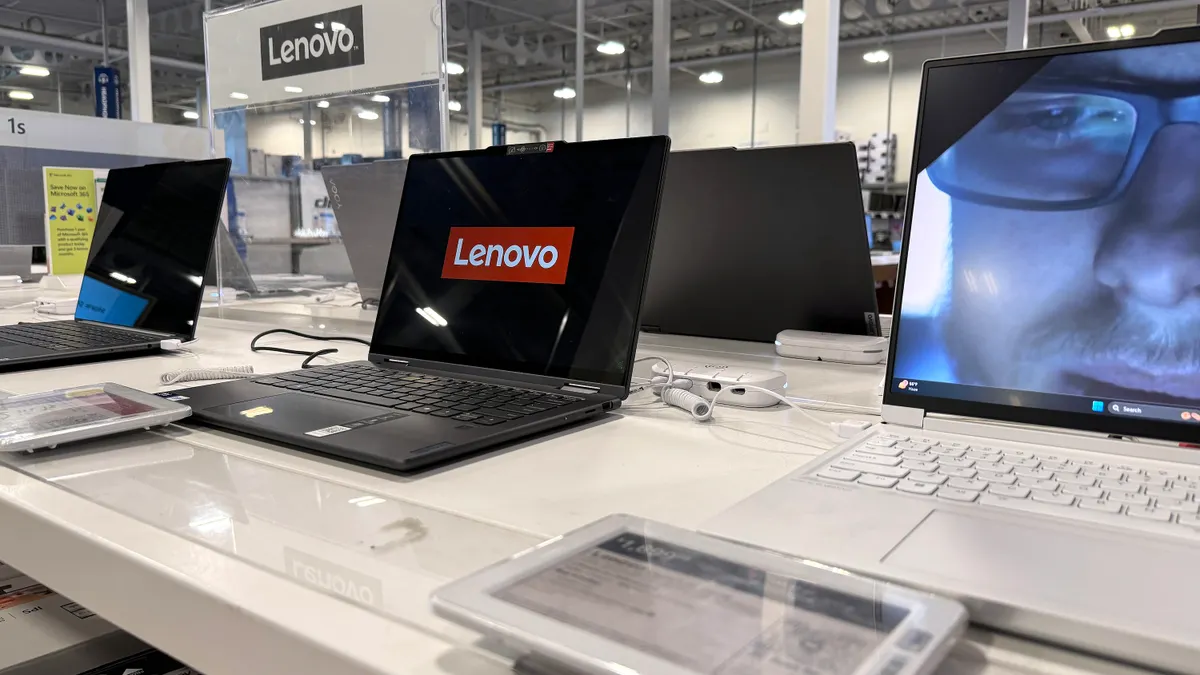
Value-added resellers are taking advantage of the Windows 11 refresh to sell a new generation of AI-enabled PCs.
“If anything, there’s still some surprise as to how many customers are still running Windows 10 after the sunset. I think the latest stats show around 30%, but that’s definitely showing double-digit growth for many of us in the partner community,” SHI SVP Kapil Bansal said at Canalys Forum Americas.
Technology advisors have homed in on customer experience and contact center software that leverage chatbots and voice agents. But many of them say they need AI vendors that extend outside CX. Expedient’s and AppDirect’s portals for multi-LLM configuration have proven popular ways to monetize known consumer brands like ChatGPT, and TAs have also earned commissions by selling consulting services from the likes of Pisteyo.
“I’m hoping and looking for different ecosystem suppliers around the tech services distributor channel, or maybe they’re going to come into the TSD channel, that can roadmap and build additional value in AI,” TechChoice President Paul Storella said.
TMG’s Marsh said AI hype resembles cloud hype in 2015, but will similarly give way to delineated productization.
“It took us a while, but we finally got cloud to where we have it in buckets,” Marsh said. “We know there's infrastructure-as-a-service, hybrid, public — all these things.”
Multi-cloud holdouts cave
Analysts and partners have been spouting about multi-cloud for years, and the architecture has recently moved out of the theoretical realm.
The conventional notion was that customers would be willing to move parts of workloads into different clouds in order to save money, said Alvaro Gonzalez, global alliance leader at Assured Data Protection. In many cases, customers didn’t feel motivated to chase “fractional pennies,” but new AI-related costs are creating the conditions for it.
“People are getting kind of mauled by either the cost of buying GPUs that they underutilize and figure out, 'What am I going to do with these?' or people have workloads that kind of scale out of cost control in public clouds. People are going to be working harder than ever to put stuff in the right place,” Gonzalez said.
Most importantly, the hyperscalers are embracing multi-cloud. Microsoft and AWS’s annual shows touted the concept, and public cloud providers have formed their own multi-cloud teams.
“I think there was resistance probably two to three years ago, but then I think they've embraced it,” said Rita Barry, director of public cloud alliances at Ensono.
Channel partners and end users will face more operational complexities as a result of multi-cloud. Gonzalez said cloud service providers must answer questions about cybersecurity and data resilience. Will a company, for example, possess two separate data lakes?
Technology advisors that source cloud service providers will want to ensure the CSP offers straightforward license portability to account for possible migrations.
OEMs, hyperscalers demand outcome-focused partners
There’s no word the channel industry beat to death more in 2025 than “outcomes.” Cisco, Microsoft, Google Cloud and VMware are among the most recent to invoke the euphemism.
Outcome-based partner programs vary by vendor, but they share one attribute in common: de-emphasizing reselling as the most important partner activity.
It’s not that vendors dislike partners, Omdia’s McBain told Channel Dive. But many of them view pure resale as no more important than a credit card swipe and will compensate it accordingly.
“Over the course of 20 years, I don't know if a pure play reseller can stay in business,” McBain said. “There just wouldn't be enough business. There wouldn't be enough margin to do it.”
On the other hand, points-based systems have created opportunities for partners to be paid throughout the customer life cycle — not just at the point of sale. But partners will need to invest in training and headcount to guide customers through the outcomes vendors demand.
A new round of TSD M&A
The private equity firms that bought into TSDs in 2020 and 2021 are now poised for recapitalization.
Pamlico’s decision to re-up with Avant and bring in Court Square Capital Partners is the first chess piece to move. Eyes are now on Charlesbank Capital Partners-backed Bridgepointe Technologies, which is currently fielding suitors, and Columbia Capital Partners-backed Telarus, which was the first TSD to accept an investment.
Sandler Partners, which is the fourth- or fifth-largest TSD by some counts, is staying put. Sandler Partners managing partner Alan Sandler said many agents are moving business to his company because of its independence.
“As we head into 2026, we’re concerned about the impact of continued industry consolidation on both partners and employees — where too many feel like a number or a line item on a balance sheet rather than valued contributors,” Sandler told Channel Dive in an email.