

VR technology is advancing faster than businesses know what to do with it, and CustomerXR thinks channel partners are the missing link.
The extended reality application developer, which builds training tools for franchise brands like Koala Panda and Meineke, is launching a channel program with technology services distributors. The goal is to use technology advisors to get in front of CIOs and IT directors who have yet to build a VR strategy, before someone else does.
R&D in the VR market is moving at a breakneck pace as Apple, Meta, Samsung and other OEMs vie for supremacy, yet technology advancement has wildly outpaced B2B use cases, CustomerXR CTO Christopher Fonte told Channel Dive.
“There's so much cutting edge technology and solutions that couldn't be done a year ago,” Fonte said. “There's so many things coming down the pipeline, and no one is able to communicate that with technology adopters.”
CustomerXR estimate that the AR/VR market will grow at a rate of 19.2% through 2032 to reach $138.6 billion.
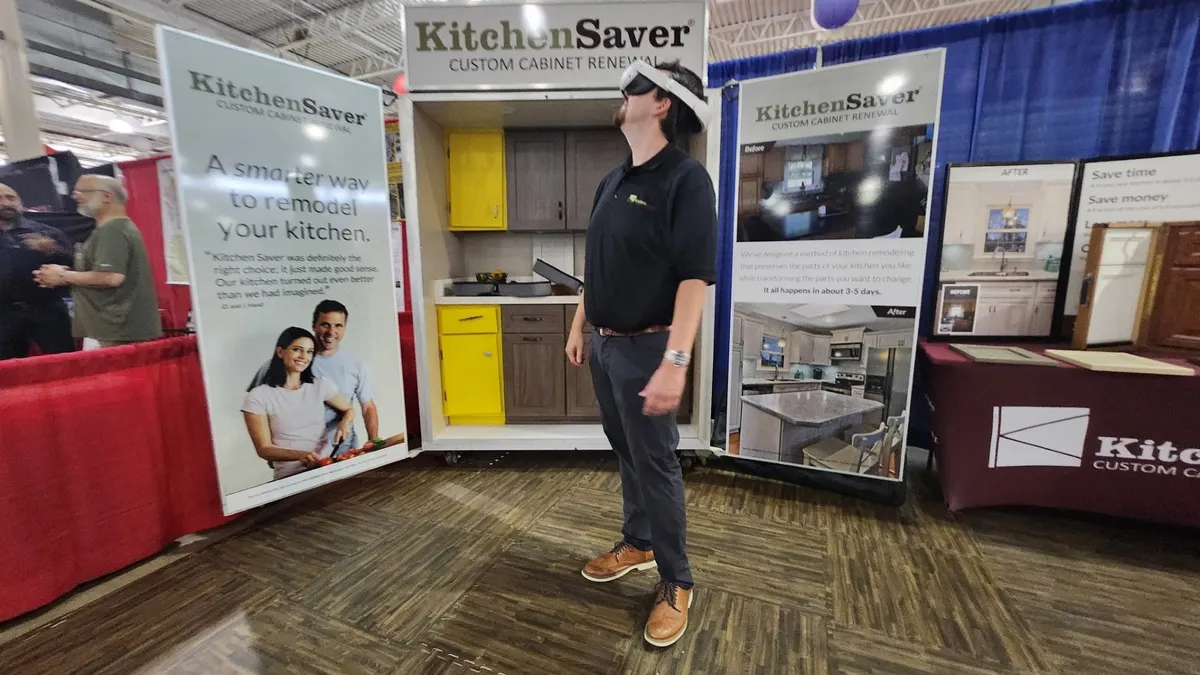
CustomerXR develops extended reality applications across different verticals — often for training employees. Quick-serve restaurant Koala Panda puts employees through VR training before they step into the line, while Meineke uses VR to demonstrate the oil changing process to customers. The provider is banking on a land-and-expand model in which franchise owners adopt its solution, and adoption ramps up throughout the rest of the franchising company.
CustomerXR charges an upfront cost for the application buildout and typically provides headsets on a subscription basis.
“We're willing to bet that this becomes an [monthly recurring charge] model across all locations, and if you're saving money at each one of those locations, it's cost justification, so it'll spread like wildfire,” CEO Kevin Sheehan said.
The model resembles the unified-communications-as-a-service model that Sheehan and many channel partners have enjoyed over the last decade.
CustomerXR has already leaned on referral partners for its initial set of deals, but those firms were not technology-focused. A real estate broker, for example, helped them identify a customer. The company could see its pipeline widen by working with TAs, who can make introductions to CIOs and IT directors.
Sheehan has worked on the TA side of the channel and most recently led the cloud contact center-focused TA Cloudlinx. On the other hand, Fonte and many of his developers come from the gaming world. Fonte said VR has become associated with consumer technology — especially in gaming — but that the market is ripe for a B2B push.
Thus far, CIOs haven’t been the main stakeholders in CustomerXR’s deals. Franchise owners have championed VR for their locations, and CIOs eventually get looped in to help implement the technology.
By signing with TSDs, the firm intends to become a vendor to the TA community and open up a new market in immersive technology.
New markets are music to channel partners’ ears. Many are searching for turnkey AI products to sell. Resellers have glommed onto AI-enabled PCs, while brokers have pitched cloud contact centers with virtual agents. Both partner types are looking for additional use cases, vendors and customer stakeholders.
“I think the TSDs are looking for things that are exciting to sell that have some serious money behind it,” he said.