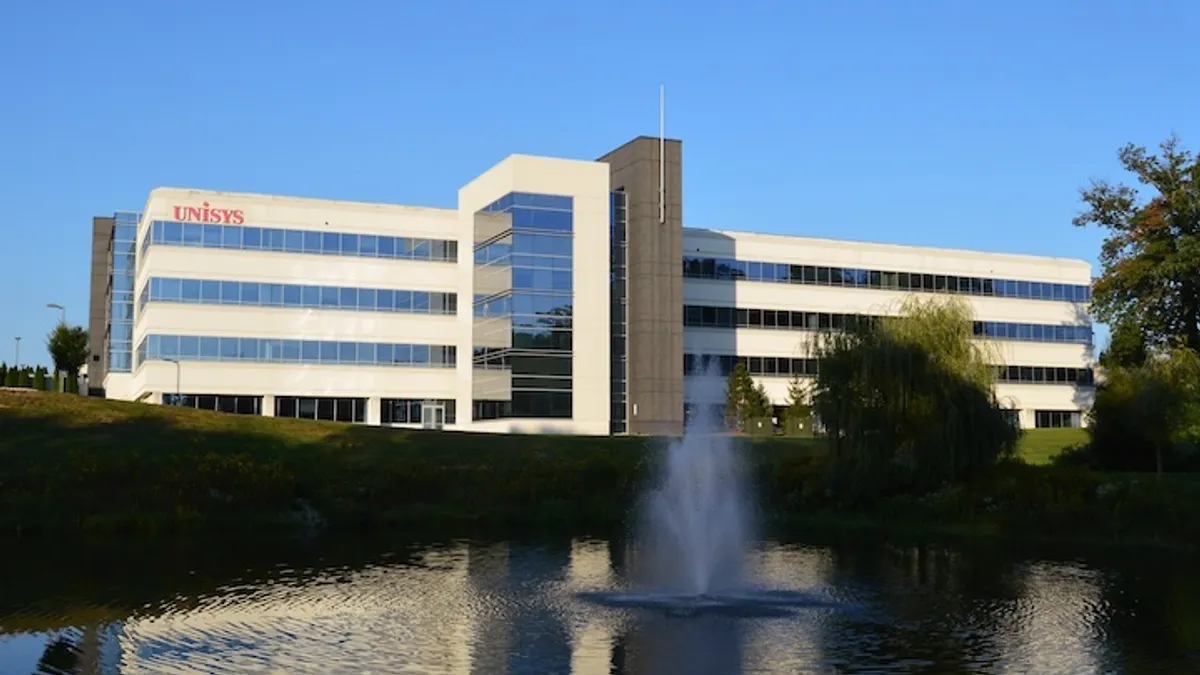
As investments in AI continued to mount last year, gaps widened between expectations and tangible returns. With ROI lagging, alignment among business and IT leaders broke down around deployment strategies, according to a Unisys report published last month.
Technology executives prioritized operational efficiency, while other C-suite leaders saw potential productivity gains undermined by inconsistencies in digital workspace tools for remote and in-office employees, according to the MSP, which surveyed 1,000 executives in the U.S., Europe, and the Asia-Pacific region.
Unisys also found a lack of agreement over generative AI use cases in IT services. Nearly three-quarters of IT leaders viewed the technology as a key to reducing downtime. Fewer than one-third of business executives agreed.
“AI alone isn't enough,” Patrycja Sobera, SVP and GM of Digital Workplace Solutions at Unisys, said in a release accompanying the report. “Alignment across business and IT leaders is essential to sustain momentum and realize the full potential of digital workplace transformation.”
IT services providers are under siege from AI assistants trained to rapidly respond to help-desk queries and chew through open tickets. At the same time, enterprises are looking to MSPs for help implementing the technology.
Unisys has felt the pinch. The company’s quarterly revenue declined 7.4% to $460 million during the three months ending Sept. 30, despite what CEO and President Michael Thomson characterized in a Q3 2025 earnings release as “momentum in our newer AI solutions.”
The AI boom is creating challenges and opportunities in IT services, according to Omdia research. While the analyst firm expected MSP revenues to grow 13% in aggregate last year, the number of providers anticipating revenue growth declined.
“The pricing environment remains competitive,” Thomson said during a November earnings call. “Clients want to share in the AI cost savings, and, in some cases, their expectations may be unrealistic.”
Realizing value
Inflated hopes led to disappointing results, according to an August Unisys report. While most organizations planned to increase generative AI investments, only slightly more than one-third said they were prepared to support large-scale AI workloads.
“There's an equal amount of hype as there is an equal amount of practicality in the adoption of these AI models,” Thomson said. “We're taking a tack to really try to be very conscious around setting the right expectations with our clients, not promising things we can't deliver.”
Unisys integrated AI into a broader, ongoing effort to modernize its field operations and pivot to a user-experience model for IT services. In addition to tracking IT service ticket resolution speed, the company has prioritized outcome quality, with AI assisting its field technicians.
The ‘effort required’ investment
In the last three years, Unisys spent roughly $10 million to upgrade its IT service management platform, Sobera told Channel Dive. The company also pivoted from service-level metrics to an experience-level model.
Traditionally, service providers met with clients on a monthly or quarterly basis, with data showing quick response time to service calls, Sobera said. A closer look often revealed that only a small percentage of calls were resolved on first contact. The next step could take several days.
Experiential metrics track the ease with which employees can complete processes such as onboarding or switch between home and office working environments, as well as how quickly and effectively service tickets are resolved.
Unisys has leveraged an AI scheduling system to speed up responses in the field and knowledge management tools to improve outcomes. The technology has deepened the company’s bench of IT talent, according to Sobera.
“We haven't necessarily, through traditional ways of working, attracted many young people to being a field technician,” Sobera said. “But we're seeing through our partners and through our own talent acquisition and feedback that there is more confidence entering this space.”