Dive Brief:
- Worldwide IT spending is expected to reach $6.31 trillion this year, up 13.5% from 2025, according to Gartner’s quarterly forecast published last week. In February, the analyst firm projected global IT spending would grow 10.8% year over year to $6.15 trillion.
- IT services comprise the largest share of anticipated spending, with application implementation and managed services, infrastructure implementation and managed services and IaaS spending generating almost $1.9 trillion in revenue. Gartner estimated that data center systems spending will experience the largest growth rate, spiking 55.8%.
- The AI spending boom is driving channel consolidation, according to Gartner Distinguished VP Analyst John-David Lovelock. “Consolidation starts now, as companies start to feel the stress of revenue recognition,” Lovelock told Channel Dive. “CIOs need to engage with upwards of 15 vendors to get a full AI solution together. And that number has to come down.”
Dive Insight:
This year was “the perfect storm” for spending growth, with inflation driving up device prices, AI buildouts peaking and software providers adding AI surcharges to their bills.
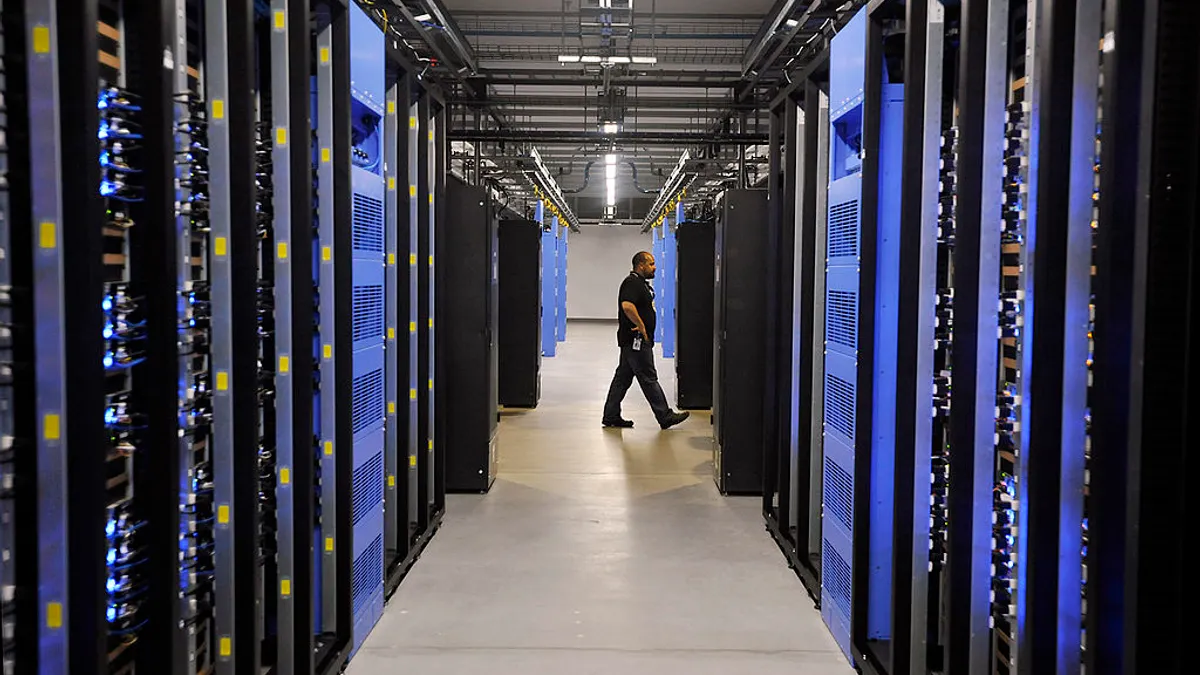
The data center buildout, which will produce $788 billion in spending by Gartner’s estimate, is booming as demand for cloud services grows. Massive capital investments by hyperscalers have pushed up server and ancillary system purchases — with spending on enterprise networking equipment, such as routers, switches and firewalls up 26% this year, according to Lovelock.
“This latest forecast underscores the accelerating momentum in AI infrastructure and advanced memory,” Lovelock said in a press release. “As AI workloads scale, data center investment is ramping rapidly, which in turn is driving increased demand for high‑performance compute. This dynamic is creating meaningful growth opportunities for companies delivering AI‑optimized processors, accelerators, and enabling technologies.”
Device spending will rise to an estimated $856 billion, per the report. Market growth in the category is being moderated by higher memory costs, which have lifted average selling prices and put the brakes on device refreshes.
Lovelock said memory chip inflation and explosive AI growth may slow over the next few years as big tech pours trillions of dollars into IT spending. He foresees strong consolidation in a market with many participants.
“We’ve had a thousand flowers bloom,” Lovelock said. “It’s now time to prune. We're going to see some companies failing, and many companies in a merger and acquisition situation. And everybody is going to be looking for new partnerships.”