

T-Mobile hired a former AT&T executive to lead the company’s new push into the indirect sales channel.
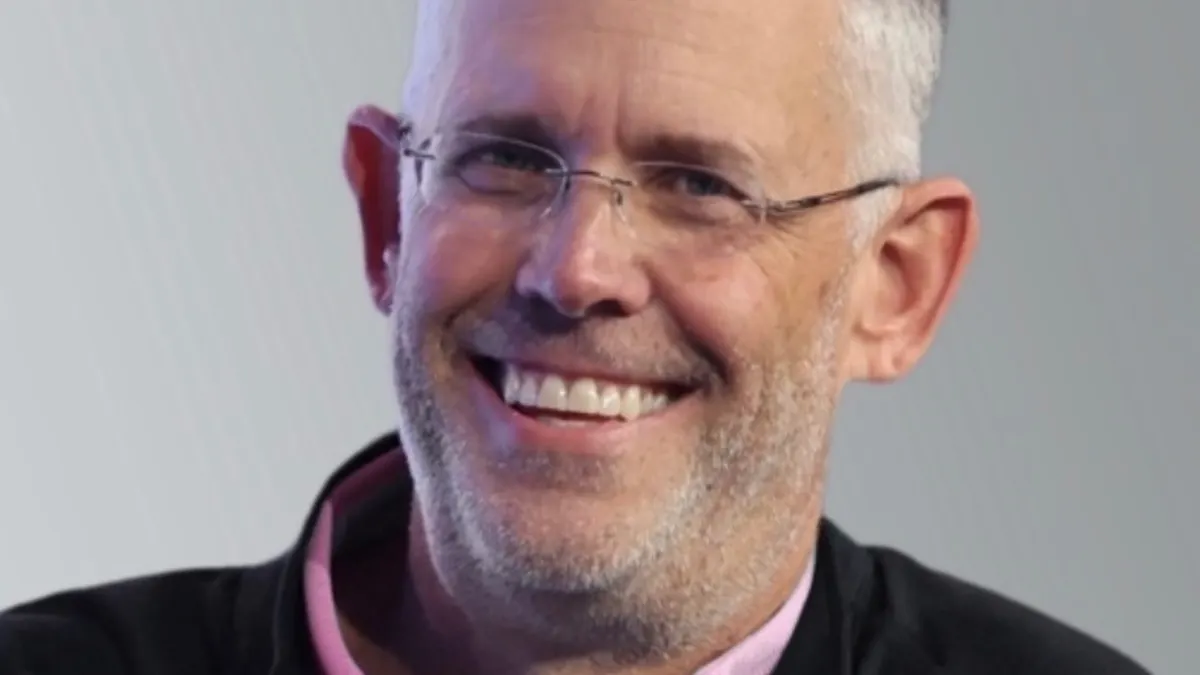
The telco company appointed Chris Jones as its VP of ecosystems and partner alliances, T-Mobile EVP of Business Sales, Customer Experience and Delivery George Fischer told partners in an email Thursday.
Fischer said T-Mobile is adopting a “connected, ecosystem-driven approach to enable growth across the full customer lifecycle.” The Omdia-coded statement reflects the larger push from telcos to shift their business sales from direct to indirect.
“Partners play an increasingly important role in how we grow, innovate, and bring differentiated value to our joint customers,” Fischer said. “Chris’s experience and leadership will be key as we continue to modernize our partner model, strengthen alignment across the ecosystem, and create new opportunities for growth.”
T-Mobile had not elaborated on its ecosystem play as of press time, but Jones’ career experience offers hints.
Jones moves over from GTT, where he spearheaded relationships with tech services distributors for the last year and a half. Prior to GTT, he architected the TSD program at AT&T and put the carrier on the map with an agent community.
He could do the same for T-Mobile, whose wireless offerings have not seen widespread adoption from technology advisors.
“This is their chance to get their story straight with somebody who knows how to build programs, tell the story and engage with the channel,” Eclipse CEO Dave Dyson told Channel Dive.
Bridging the wireless gap
T-Mobile's had a strong presence among mobility specialists like Hyperion but has struggled to entrench itself in the average agent’s line card, despite attending TSD events.
The company's difficulty breaking through has much to do with industrywide obstacles that kept TAs from selling fixed wireless and mobile data plans. Omdia Principal Analyst Devan Adams estimated that while wired connectivity accounts for some $5 billion of TSD billings, mobility and IoT represent only $400 million.
I tell my big enterprise clients all the time; it is the one category that is the definition of death by a thousand paper cuts. On your wide area network, you have one big, screwed up bill. On your mobile bill, you have a thousand small, screwed up bills.
Dave Dyson
Eclipse CEO
Part of the problem is financial. Mobile providers only recently adopted royalty-based monthly commissions that agents prefer. And even with compensation parity picking up, complexity remains a barrier.
“I tell my big enterprise clients all the time; it is the one category that is the definition of death by a thousand paper cuts,” Dyson said. “On your wide area network, you have one big, screwed up bill. On your mobile bill, you have a thousand small, screwed up bills.”
But TAs soon may have no choice but to sell beyond the wireline, as customers increasingly use 5G-based fixed wireless and satellite-based connectivity.
“Wireless networks, including fixed wireless and broadband satellite, are competing in the battle for the best backup or secondary connection,” Adams said. “And in underserved rural and remote regions, where fiber infrastructure is sparse or nonexistent, mobile wireless and satellite are locked in a head-to-head battle to the first choice primary connection.”
It’s not just a mobile play for T-Mobile. The “uncarrier” is expanding its fiber footprint and looking into purchasing fiber assets from Uniti Group. Dyson said it all adds up to a strong product portfolio, if T-Mobile can make it easy for partners to sell.
“Don't keep changing the program. Don't change the incentives. Announce it, execute against it, and for fuck’s sake, just do the thing you said you're going to do for the next three years, and then watch the channel pile in and start selling your stuff,” he said.
Telcos historically ran most of their business sales through their own salespeople. Channel leaders from AT&T, Verizon, T-Mobile and Lumen are all on record saying they want to increase their percentage of indirect sales, but that requires acknowledging their history of channel conflict.
Dyson believes Jones is the person who can walk the fine line of handling partner feedback about the past and building trust for the future. The TSD named Jones its 2021 channel chief of the year precisely for his ability to mediate between partners and AT&T Business leaders.
“There will be some atoning for the sins of the past. You know how the channel people are. It's a bunch of old curmudgeonly goats like myself going, 'Sprint screwed me on a deal 14 years ago— fuck T-Mobile,’” Dyson said. “He's gonna have to be like, 'I understand Sprint did upsetting things to you in 2006. Let me help make that better.'"