

DALLAS — As IT leaders turn to LLMs to inform technology purchases, Avant is arming partners with data and context public models lack.
The technology services distributor at its annual summit on Wednesday announced an AI model called Orion that its partners can use to access its trove of product and sales information. Orion accesses the data through an intelligence layer called The Grid. Users will also have the option of plugging third-party AI models into the The Grid’s API.
The Grid mines 17 years of Avant data, contextualizing industry-specific information about vendors and customer projects that's beyond the reach of public LLMs.
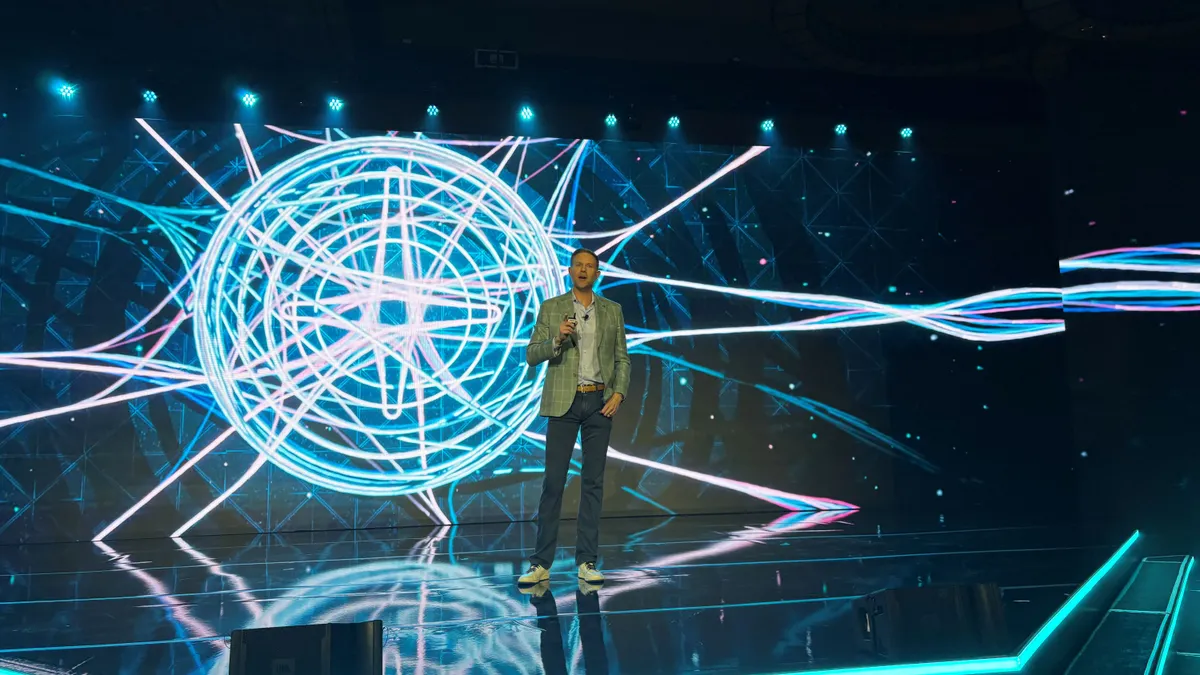
“These large models have been learning our industry by scraping a mass amount of public data, but we learned it by living it,” Avant Cofounder and CEO Ian Kieninger said onstage at the Special Forces Summit.
Avant is currently trialing The Grid with a small group of TAs. It is internally testing Orion. The company plans to release a beta version in the first quarter of 2027, with general availability to follow in Q2. Orion will eventually be integrated with Avant’s Pathfinder sales enablement platform, Avant Senior Director of Applications and R&D Derek Tupper told Channel Dive.
“There'll be concepts in Orion that we'll try out, demo, get in real users' hands and see how they fly,” Tupper said. “If they really catch on, we'll upgrade them, integrate them into Pathfinder as first-party features.”
Kieninger demoed the platform during his keynote speech, asking Orion to pull project management updates and historical sales trends from The Grid. Because Orion is a chat interface, Avant executives said it’s likely to garner the most attention from TAs. But the real story is in the data.
“We're not just sourcing data; we're not just buying data,” Avant VP and Head of Marketing Claire McAuliffe told Channel Dive. “This is all data based on channel interactions that we have validated. It's contextually trained. It understands the channel and what the buying patterns are.”
Avant believes industry context will give TAs an advantage over the AI assistants CIOs can use to vet technology vendors. Kieninger named autonomous decision-making a key adversary of the advisor channel. One TA firm recently admitted to losing a $40,000 per-month deal to a chatbot, he said.
“The client called them and said, ‘Hey, thanks, but no thanks. I bought directly from the vendor based on an AI agent recommendation,’” Kieninger said. “That's kind of scary.”
A survey by the AI Revenue Institute found that 82% of B2B buyers would be skeptical of third-party advisors or avoid them entirely if AI disagreed with the partner. Kieninger said it’s part of a generational shift away from old school procurement paths. Millennial and Gen Z buyers want to look online for answers, and they don’t care for Google searches or vendor-sponsored white papers. Using an LLM is akin to pressing the easy button.
“The models are fast. The models are really convenient, always available and boy do they sound confident, even when they're wrong,” Kieninger said.
TSDs and TAs insist that the most important data in IT purchasing doesn’t exist publicly online. Moreover, vendor information on the internet lacks context on the ins and outs of procurement. When most of the public information comes from advertising material, it’s very difficult for an LLM to alert CIOs of potential pitfalls.
“The blind side is not going to be in a large language model right now; it's things that we have learned in the thick of it,” Datamob SVP Kristy Thomas said.
For Avant, LLMs are a fact of life. The company’s TA partners have their own AI assistants that Avant hopes they will plug into The Grid, the company said.
“We want to be able to support people using the tools that they love,” Tupper said. “There will always be windows that we create for people that aren't at the scale to do API connections.”
The foundation
Avant’s approach to AI has moved in phases.
The first was getting its data in order. The company launched a new data model in early 2025. Previously internal AI models pulling from the company’s database were hamstrung by siloed data. Information was spread out across disparate locations. Pathfinder and other Avant systems collectively generate about a million data events per week, according to Tupper.
With a centralized data lake in place, The Grid can contextualize the data.
“Think of that as ground level, and then the Grid is like we're going into space,” Tupper said.
A further gauntlet of testing awaits The Grid and Orion as both products ease into general availability. That’s in part to ensure cybersecurity, Tupper said.
“It is going to be a very powerful tool, and we don't want someone to misuse it or be misled, because we didn't do proper internal testing,” Tupper said.
Beta trials will also help Avant determine if and how it will charge for the new products. Tupper said Avant will evaluate usage patterns to understand the ideal economics. It could directly charge for access to The Grid, offer a commission split, make it available only to a certain tier of partners, or make it complementary. The latter is unlikely.
Avant currently doesn't charge TAs for access to its tools but has privately acknowledged that it won't make sense to offer an innovation that cost millions of dollars in research and development for free.
“The reality is, the very nature of token economics is going to play a role in all of these types of applications and platforms over the coming years,” Avant Chief Innovation Officer Chris Werpy said.
Avant is positioning itself and its TAs against analyst firms and global systems integrators that enterprises call upon for IT transformation products. Kieninger said the two new products will create “the most sophisticated buying experience in the world.”
“No one can do this,” Kieninger said. “Gartner can't do this; Forrester can't do this; Accenture can't do this. No other TSD can do this.”