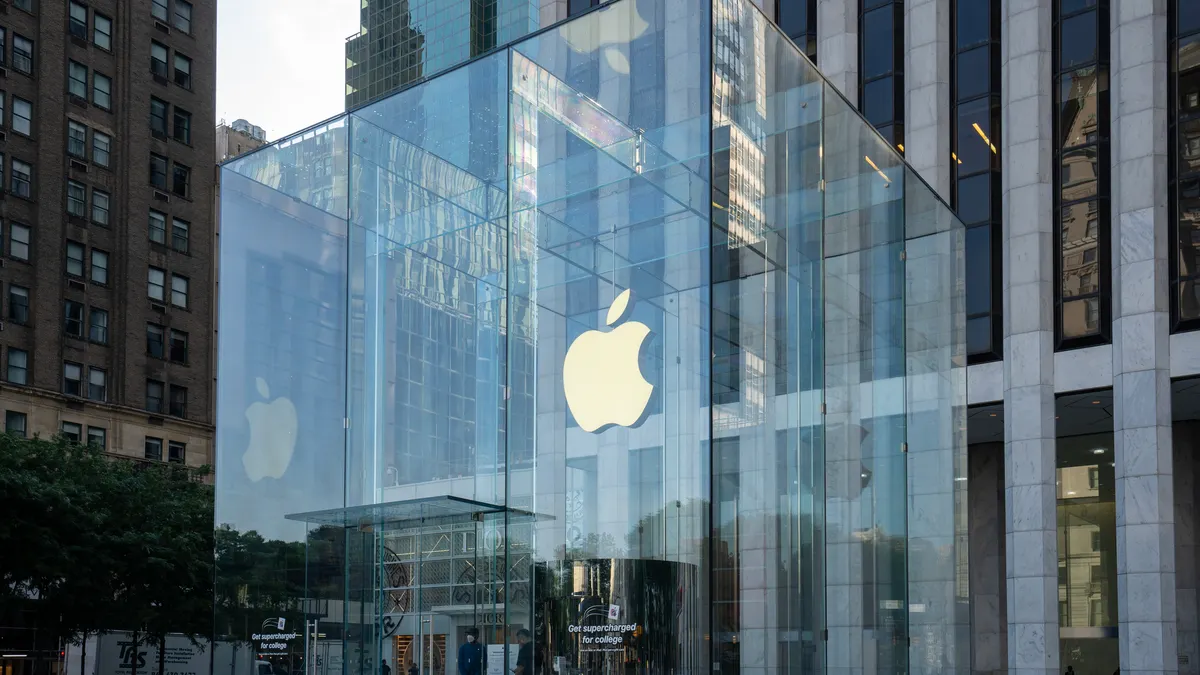
Amid an ongoing memory chip shortage, Apple finally raised its MacBook prices last week. The starting rate for the tech giant’s entry-level MacBook Neo increased by $100, while the price for the MacBook Pro 1TB went from $1,699 to $1,999.
Apple is the latest to pass on component costs to consumers as AI infrastructure buildouts drain global memory supply. Dell, Lenovo and HP Inc. have also raised PC prices to help offset costs from mounting memory chip inflation — or, memflation — which emerged last year.
Dell raised hardware prices this spring, with some PC models going up by hundreds of dollars. Lenovo took similar actions in June, according to CRN reporting, while HP warned investors and partners of rising costs during the first quarter.
“Memory pricing has gone crazy,” Ranjit Atwal, research director at Gartner, told Channel Dive. “We’re at a point where it’s become prohibitive for vendors in terms of pricing. Apple is known for its efficient supply chains and for managing products and costs. Even they cannot manage this.”
The expansion of AI infrastructure shows no signs of leveling off, according to a recent IDC report. Server demand is growing faster than chip supply, and consumers buying smartphones and PCs are now competing with hyperscalers and massive data centers for memory.
The chip market has shifted toward AI training, which is redirecting supply and tightening allocations for high bandwidth memory and dynamic random-access memory components, IDC said.
Apple's MacBook move is the clearest signal yet that this is not a normal pricing cycle, said Kieren Jessop, principal analyst at Omdia, a Channel Dive sister company.
“When the vendor with the most supply-chain control and the most loyal customer base — one that can usually hold the line on price — concedes that increases have become unavoidable, it tells you how severe the underlying squeeze is,” Jessop told Channel Dive. “Apple is actually the best-insulated of the major vendors, thanks to dedicated memory agreements and its own silicon, so the fact that it has raised prices most visibly is the tell.”
Large enterprises that refreshed their fleets in 2025 are largely insulated, Jessop added, so it's budget-strapped consumers and small businesses that will feel the brunt of Apple’s price hikes.
“Memflation could actually threaten Apple's share gains this year,” Jessop said.
After Apple announced the price spike last week, shares of the company sunk by more than 6%. It was the tech giant's worst day in over a year, though stock prices have rebounded since.
Pricing pressures are already affecting the broader PC market. As PC costs rise, shipments dropped to approximately 260 million units from nearly 300 shipped in 2025, according to an IDC analysis.
Q1 2026 PC shipments, which increased by 4%, were artificially inflated by vendors and distributors stockpiling inventory ahead of expected Q2 price hikes, a Gartner analysis found. Apple’s PC shipments grew 12.7% year-over-year, driven by MacBook Neo demand among new Mac users and students, the analyst firm said.
The market’s trajectory remains in flux. IDC expects PC prices to increase 10% or more in the next year and remain elevated even as shipments rebound, recovering past 290 million units by 2030.
Atwal said PC prices will go up by 20% or more this year, with a major bump in the back end of 2026. In Q4, rates could increase by 30% and then inflate another 10% in 2027, he said.
Looking beyond the immediate crisis, Atwal said the industry faces fundamental questions about the future of PCs as AI-enabled PC products fly off assembly lines.
“The PC industry has to be almost revolutionary as it moves forward, thinking about PCs,” Atwal said. “And it’s not known to do anything revolutionary. It’s all incremental. By 2030, the question is: what is a PC actually going to look like, and what is going to cost? You may end up needing more memory to enable that whole AI spectrum to work.”