


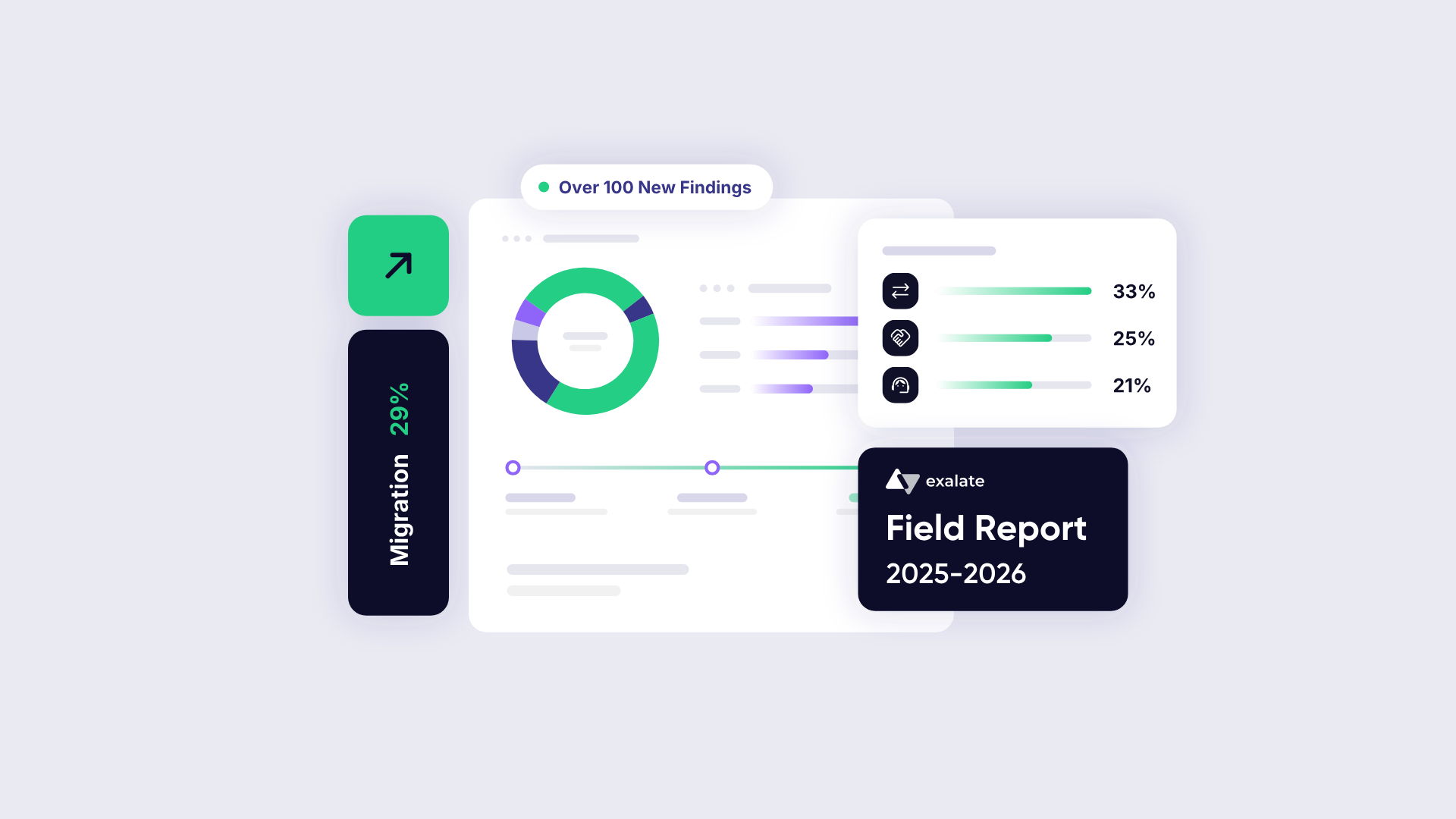
Exalate, an enterprise integration software company, today published its 2025–2026 Field Report, based on approximately 110 anonymized customer conversations held between July 2025 and September 2026. The report examines how integrations support work with vendors, clients, and partners, and what happens to those connections during system migrations, mergers, and restructuring.
Ownership and visibility across teams
A service desk can remain accountable to the customer while engineering or a provider works on the fix. Teams need to agree which status changes, comments, and attachments each side can share and who acts when an update fails.
Some teams had lost the person who set up an integration or depended on one person to run it. CIOs can ask who investigates a missed update, who can step in, and how long it takes from an escalation to the first update the service desk can act on. In some organizations, renewal decisions had also moved from technical teams to procurement, so the people running an integration were often not the ones funding it.
“Many of the decisions teams described were about responsibility as much as technology: what each side can see, who can change it, and who responds when an update fails,” said Francis Martens, chief technology officer at Exalate.
Service continuity during system changes
When teams move or consolidate systems, they need to move historical records, preserve or re-establish links between open items, and adapt rules tied to the old system. Atlassian has set March 28, 2029, as the end-of-life date for its Data Center products, including Jira Software and Jira Service Management.
Before cutover, teams can inventory active integrations and identify scripts or API dependencies that may need to change. Before retiring the old system, they can run one open issue through the new setup, verify that updates reach both teams, and test how to recover a missed update.
Accountability when AI enters a workflow
These accountability questions become more pressing as business teams introduce AI agents that can read or change records across systems. In Thoughtworks' Global CIO Survey 2026 of 3,200 CIOs across 10 countries, nine in 10 said central IT would still be held accountable for security or compliance failures caused by AI tools that business units bought on their own. That makes it worth settling the basics before an agent goes live: which records it may update, who answers for its actions, and how its changes can be traced.
For CIOs, the test is whether teams can maintain service continuity as business units, systems, and providers change. Reliable integrations keep the updates teams need flowing across the tools they already use.
Key findings
- 47% of customer conversations involved support-to-engineering workflows, the most common use case.
- 39% of conversations concerned cross-company integration use cases.
- 32% of check-in conversations involved teams that had lost the person who set up the integration or relied on one person to run it.
- 29% of customer conversations involved a migration or a period of running two systems side by side.
- 24% of customer conversations included requests for better monitoring, alerts, or error details.
- One in five customers described their integration as business-critical.
Read the Exalate Field Report 2025–2026 and download its companion, The Practical Guide to Reliable Integrations. The guide includes worked examples and planning briefs for sharing work with partners, handing off incidents, and recovering an integration after a disruption.
About the research
Exalate analyzed approximately 110 customer conversations held between July 2025 and September 2026. To protect customer confidentiality, Exalate anonymized the conversation material, removing company names, personal identifiers, and sensitive details, and reports the findings only in aggregate. Customers are named only in examples drawn from Exalate's published case studies. The figures describe this customer sample rather than the wider market, and figures from check-in conversations refer to that subset. Exalate plans to repeat the study in 2027 using the same themes and counting method.
Exalate provides enterprise integration software for organizations that need to coordinate work across business units and company boundaries. Its real-time, two-way integrations connect systems such as Jira, ServiceNow, Salesforce, Azure DevOps, and more. Based in Antwerp, Belgium, Exalate serves more than 2,500 organizations worldwide. Learn more at exalate.com.