


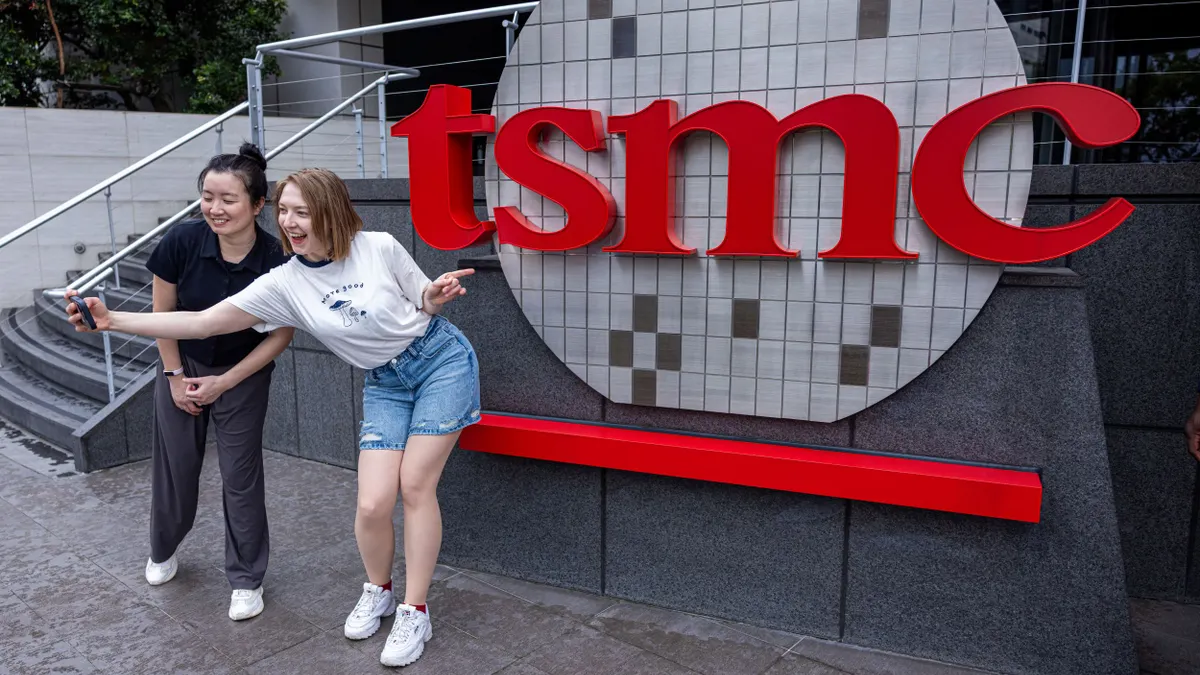

The Taiwan Semiconductor Manufacturing Co. plans to invest an “incremental” $100 billion in domestic semiconductor manufacturing, bringing the company’s total U.S. investment to $265 billion, the White House and the Department of Commerce announced.
The money will go toward advanced semiconductor manufacturing and packaging facilities in Arizona, bringing TSMC’s pledges across 2024, 2025 and 2026 to a $265 billion investment as a whole. The money will collectively fund a total of 12 facilities in the United States, according to a news release.
“This additional $100 billion investment marks a significant expansion of TSMC’s commitment to build multiple fabrication plants and advanced packaging facilities in the United States,” according to the federal government’s news release. “TSMC’s investments in the United States are expected to create significant construction and high-tech jobs while driving billions of indirect economic output as TSMC executes its investment plan.”
The latest announcement follows TSMC’s March 2025 pledge to expand its original $65 billion investment commitment by an additional $100 billion to build two additional semiconductor facilities in Arizona.
TSMC, which manufactures chips for industry heavyweights like Nvidia, is the world’s largest contract semiconductor maker.
The company was awarded $6.6 billion in funding under the CHIPS and Science Act. TSMC began high-volume production at its first Arizona fab in Q4 2024.
TSMC’s investment could further strengthen President Donald Trump’s plan to build out the U.S. manufacturing industry, a key tenet of his domestic policy agenda. While critical of the CHIPS and Science Act, Trump has said he wants to bolster U.S. manufacturing and lessen reliance on chip imports.
Other semiconductor companies have also promised major investments in U.S. semiconductor manufacturing. On July 9, Micron Technology pledged to increase its U.S. commitment to more than $250 billion through 2035, prompted by soaring demand for its dynamic random-access memory products to power artificial intelligence and data centers.
A day earlier, Apple announced a new multiyear commitment with Broadcom to design and produce custom silicon components and wireless connectivity technologies for a wide range of Apple products. The agreement is expected to exceed $30 billion and will lead to the production of more than 15 billion U.S.-made chips and will reportedly support hundreds of American jobs.
In May, Hanmi Semiconductor announced it will formally enter the U.S. market by establishing a local subsidiary, Hanmi USA, in San Jose, California, by the end of 2026.