


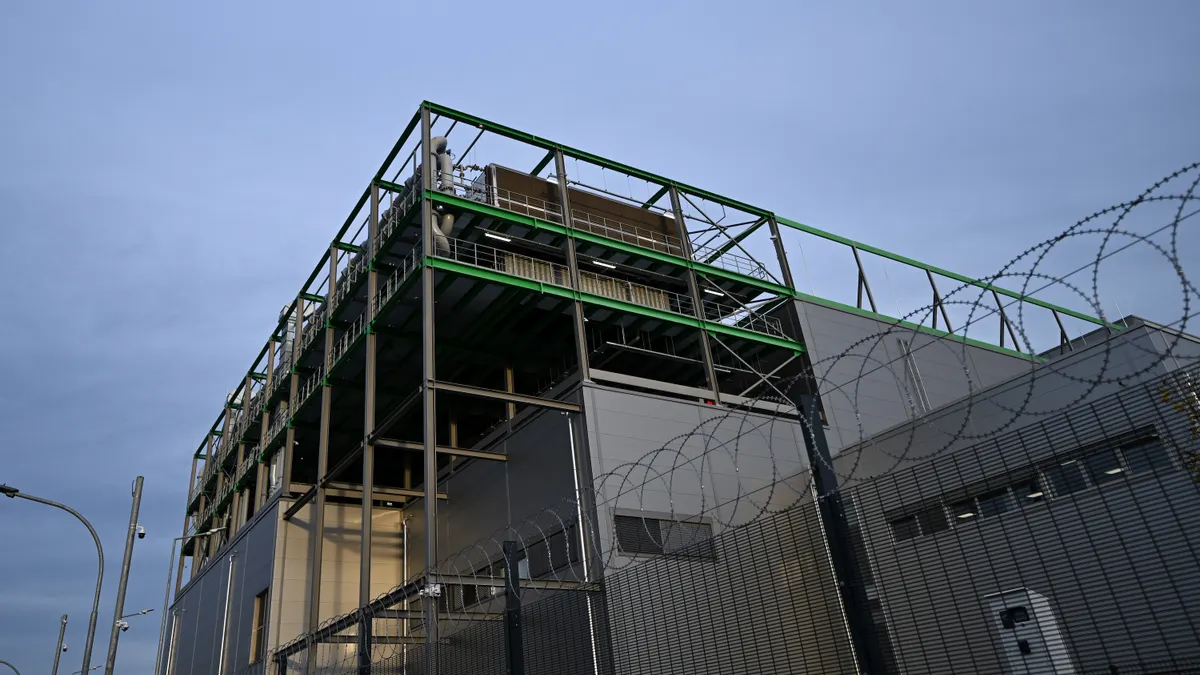
The technology sector is navigating a stark corporate paradox. Even as the industry's largest vendors break growth records and rake in unprecedented profits, they are slashing headcounts to fund staggering capital infrastructure investments.
Aggregated revenue for 18 of the world’s largest tech providers jumped 28.3% year-over-year to $694 billion, according to Omdia, a Channel Dive sister company. The numbers shattered the analyst firm’s initial high-point forecast of 21.8% and marked the strongest quarterly expansion the index has seen since 2010. Of the 18 tracked vendors, 15 delivered revenue above their high-end expectations, with 10 achieving all-time records.
The reason? A “decisive shift in artificial intelligence economics,” Omdia Chief Analyst Matthew Ball and Research Analyst Srikara Upadhyaya wrote in the May report. In other words, enterprise AI has officially crossed from experimental trials to live production environments, triggering broad-based, multi-layer spending across the IT stack.
At the infrastructure layer, enterprise buyers are expanding investments beyond GPUs to custom AI processors, high-performance networking and advanced memory to support complex agentic AI workloads.
Surging demand, coupled with supply constraints, drove customers to pull hardware orders forward, Omdia noted. Meanwhile, Nvidia’s data center revenue climbed 75% year-over-year to $62 billion, while Dell Technologies saw its AI-optimized server revenue skyrocket 342% to reach $9 billion.
At the cloud layer, hyperscale backlog mounted alongside never-before-seen capacity demands. AWS reported $364 billion in unfulfilled projects as it inked new deals with Anthropic, OpenAI and Meta. Even so, the world’s largest public cloud provider grew revenues 28% — its fastest pace in 15 quarters — pushing its annual run rate to $150 billion.
Microsoft’s cloud revenue jumped 29% to $54.5 billion, with Azure up 40% amid AI and non-AI usage. Google Cloud revenue soared by 63%, exceeding $20 billion. Revenue from products built on Google Cloud generative AI increased 800% and the company’s total backlog nearly doubled to $462 billion, per Omdia.
Crucially, the top-line explosion delivered a huge bottom-line windfall. Aggregated net income for Omdia’s 18 Tech Titans surged 64% year-over-year to $234 billion. While profits were partly lifted by valuation gains from equity stakes in AI developer Anthropic following its Series G round, the primary driver was severe cost restructuring and AI-driven efficiencies implemented over the last 12 to 18 months, wrote Ball and Upadhyaya.
The profit boom exposed a widening corporate dichotomy. During the quarter, four tech giants announced layoffs that cut 58,000. Oracle slashed roughly 18% of its workforce to keep operational costs in check as it funneled a projected $50 billion into data center infrastructure. Microsoft signaled that more layoffs are on the horizon, even as its annual AI run rate climbed 123% to $37 billion.
While executives frequently cite AI-driven efficiencies for these actions, Ball and Upadhyaya said the real driver is a necessary corporate unwinding of the over-hiring surge that occurred back in 2021 amid the COVID-19 pandemic.
For channel partners, distributors and the wider IT ecosystem, the opposing forces create intense margin pressures alongside new pipeline opportunities. Rising component costs compressed hardware margins with little relief expected before 2027. Furthermore, legacy software revenue is eroding as automated AI agents replace discrete applications, threatening traditional seat-based SaaS monetization models, the analysts said.
To maintain profitability, partners must quickly pivot away from simple software reselling and reposition themselves around deep systems integration, high-performance networking orchestration and custom deployment services for agentic architectures.
Omdia has raised its full-year 2026 midpoint revenue growth forecast for its Tech Titans to 26.8%. This revised trajectory puts the aggregated index on a clear path to surpass the historic $3 trillion mark this year — just two short years after breaking the $2 trillion milestone.