


The software industry is at an inflection point, as major vendors face growing scrutiny from skeptical investors. Vendors need to ditch outdated pricing models in favor of usage- and token-based models if they want to survive a so-called SaaSpocalypse, RapidScale President Duane Barnes said.
The crisis has intensified in the last six months, with software stocks prices plummeting. The markets view AI as an existential threat that will reduce SaaS license purchases by reducing headcounts. Vibe-coded application development is also a looming concern that could take a bite out of software earnings.
For channel partners, the biggest impact could come from vendors overhauling how they charge clients. RapidScale is asking vendor partners to ditch flat, per-seat, per-year pricing structures in favor of fees tied to clients actually using their tools.
“I'm like, 'Look, I need an all-you-can-eat buffet license of your stuff, and then you just need to charge me for whatever my customers are consuming,” Barnes said.
For customers, current billing models are inflexible, and for partners, monthly billing cycles are full of back-and-forths with the vendor on manual quotes.
“I don't want to staff an inside sales team and a quote desk to make your product work for my customer,” Barnes said. “Give me an API with full access to everything you offer, and then send me a bill broken up by customer for everything they consume.”
Barnes said the newest generation of AI-focused startups has embraced outcome-based pricing, but RapidScale’s legacy vendors have yet to adopt it.
“Many of them are like, 'We can do this now.' Have any of them delivered it yet? No.”
The managed services provider had already offered consumption models for the public cloud, but in January, it unveiled a consumption model for the private cloud with VMware.
“Our view was, why should we and why do we and why does the industry treat VMware differently than AWS? At the end of the day, the customer is still just consuming resources in a data center somewhere,” he said.
Microsoft drama
RapidScale is lobbying its vendors for outcome-based pricing as changes in Microsoft licensing fees ripple across the channel.
For years, resellers have been constrained by Microsoft’s sales structure, as the IT giant used bundles to drive adoption of strategic products — most recently Copilot. Microsoft has subtracted points from partners if their clients aren’t using applications from purchased bundles. The policy has particularly riled partners working with smaller customers who don’t use the full suite of Microsoft 365 products.
“Your average productivity worker in a company is never going to use Power BI,” Barnes said. “They're probably not using OneNote. They're probably not using PowerPoint very often. They're in Outlook, Word, and Excel. That's about it… and yet, Microsoft wants you to buy Viva Engage and all of their fancy things that only large enterprises might care about, but the midmarket could care less.”
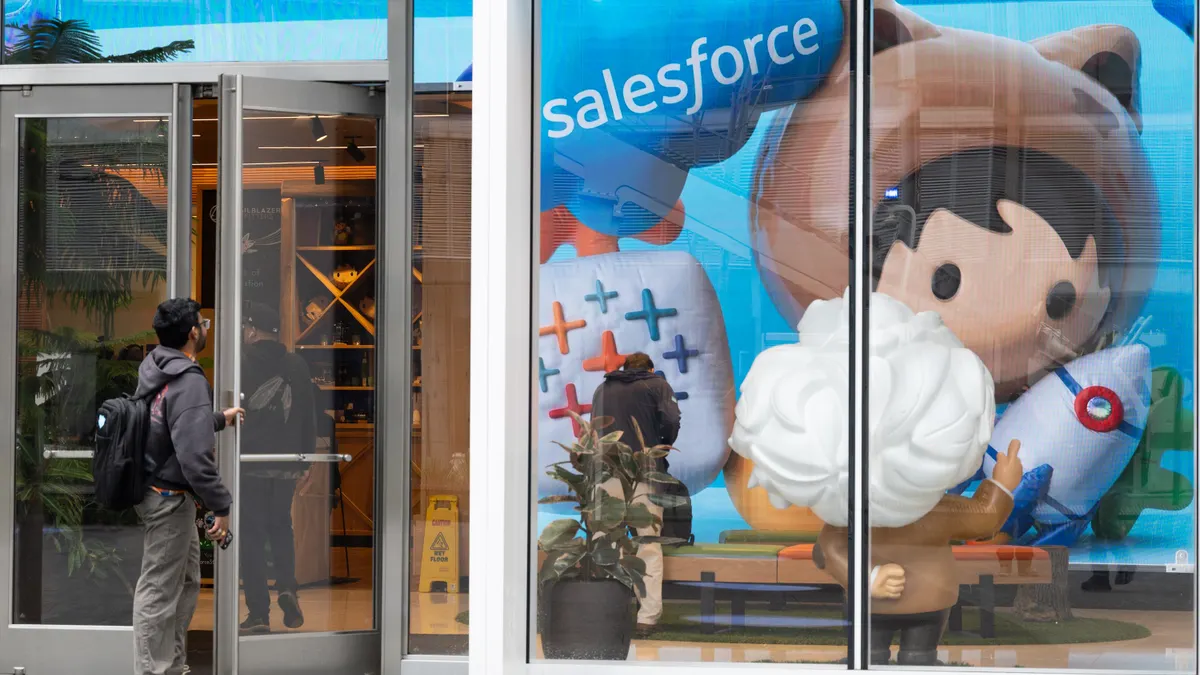
Microsoft’s usage emphasis was inspired by Salesforce several years ago. The latter was seeing a higher percentage of customers using all the software in its suites. According to Barnes, Microsoft turned to partners to drive up usage rates.
“And we said, ‘Well, maybe you should make software people want to use,’” Barnes said.
Skin in the game for partners
Giving partners points for their customers’ usage rates is one thing. Tying partner compensation to client consumption is another.
RapidScale has a community of sales partners, and those firms have seen month-to-month compensation change. The provider provides a commission that’s proportional to whatever the end user paid in the month.
“We've pivoted to consumption across the board for everything we sell where we can. I can't really change Microsoft's model, but when a [technology advisor] brings us an AWS/Azure/GCP/VMware-type opportunity, we stopped doing quotes and hard contracts to estimates and commitments,” Barnes said.
For some partners, that will increase revenue forecasting fluctuations to uncomfortable levels. Others say that compensation models closely tied to consumption will reward the most consultative partners.
“I think it puts way more incentive on us and channel partners to be paying attention and driving adoption and enabling adoption within the platforms,” CXponent CEO Joe Rice said. “Most of these customers are underutilizing their capabilities. That's true of all enterprise software.”
Usage-based pricing is emerging in the customer experience market, where turnkey AI-based solutions have enjoyed mass adoption. Rice said the large cloud contact center providers are slower to pivot, but some of them are tinkering with token-based pricing models. In the meantime, conversational AI solutions that bolt onto the contact center are pivoting faster.
“With traditional seat-based pricing, a CX vendor benefits from more manual work because it requires more employees on the phones,” Boost.ai Director of Strategic Alliances Hannah Pryfogle said. “You can’t influence a company's growth. It’s a passive approach. With usage-based pricing, a vendor is incentivized to advise the customer on where they can add more automation.”
Resolution-based pricing is a step beyond usage-based. Firms are charging a fee per successful customer interaction. The customer’s customer is responsible for deciding if their interaction was successful. It’s a neutral criteria that CFOs can’t argue with and one that scales, Barnes said.
“Not only do you want your customer to adopt more automation, but you want that automation to actually work,” Pryfogle said. “Vendors are encouraged to constantly make their solution better.”
The biggest problem is billing, which is tied to manual reporting, Pryfogle said. Moreover, standards vary in what constitutes a successful resolution.
“Does resolution include someone getting frustrated and hanging up? Does it include escalation by request or by design? This can make vendor evaluations nearly impossible, as pricing isn’t apples to apples,” she said. “The industry isn’t there yet, but usage-based pricing is the next best thing.”