

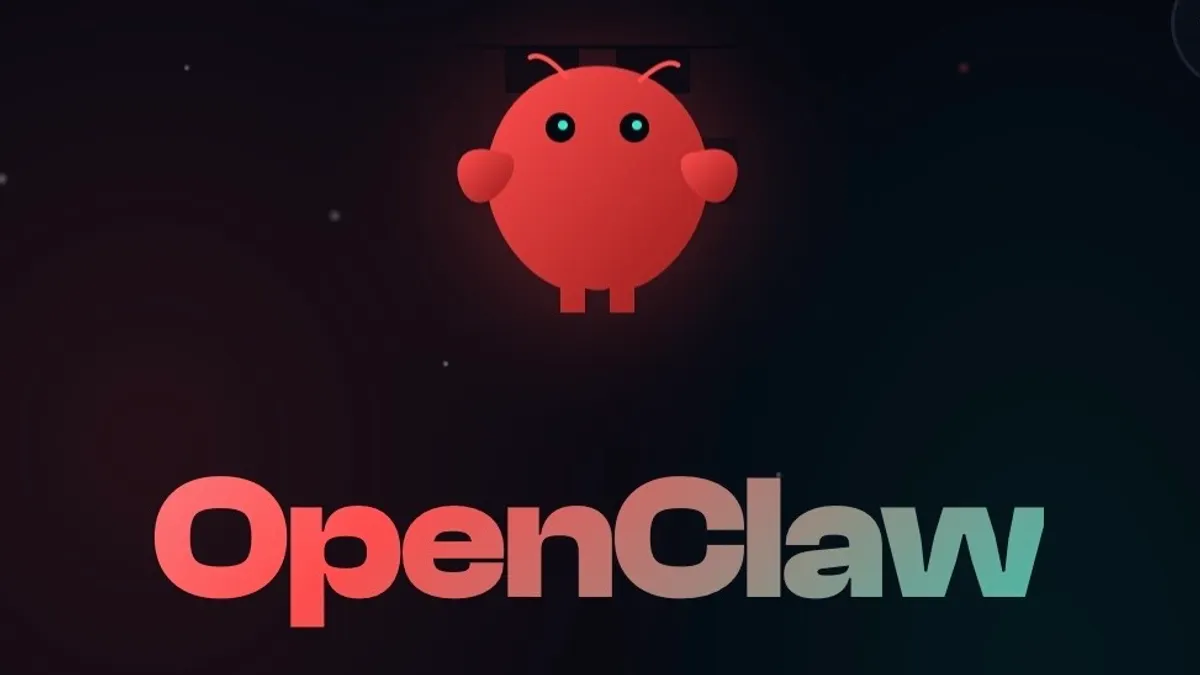
As open source agentic AI tool OpenClaw spreads through the enterprise, managed service providers are reconsidering their approach to internal AI adoption.
The arrival of OpenClaw, dubbed by Nvidia CEO Jensen Huang as “the single most important release of software probably ever,” set virtual assistants loose in the wild to conduct automated workflows. The tool's low barrier to entry has caused MSP leaders to question whether to partner with industry-focused AI vendors or build it themselves.
“The build-versus-buy decision is now one that I am reckoning with literally dozens of times a day,” Mann Consulting President Harold Mann told Channel Dive.
Out of security caution, Mann Consulting has blocked the tool in its own operations and recommended that its clients do the same.
“I don't think trust-but-verify is the way of doing it,” he said. “I think it's don't trust, and verify.”
In the meantime, Mann has spun up his own instances of OpenClaw to understand what the industry is dealing with. The results have been jaw-dropping, he said.
“One was it realizing what I wanted instead of what I requested. Another one was it improving itself without me telling it how to. And the third one was just watching it control a browser on its own, using its own intuition,” Mann said. “When you see it in front of you on your own screen, it's magical.”
The possibilities are endless for both good and bad. Mann calls it a Linux moment.
“I can just take this thing over here and this thing over here, and Frankenstein it together and do something,” he said. “Just like with Linux, it's the Wild West. It's unmanaged. It's unrestrained, it's unguarded. So I think all the good and all the bad is all happening, but it's happening at a speed which none of us have experienced.”
Pathways to AI
The San Francisco-based MSP is evaluating its AI strategy amid a larger AI impact facing the MSP industry.
MSPs are automating operations to cut staffing costs and increase ticketing effectiveness. Born-in-AI competitors and VC-backed “AI-first” roll-ups are looking to displace partners that don’t adapt.
“I'm confident that traditional MSPs right now are the equivalent of Exchange servers, and there's a Gmail out there that's going to clean their clock,” Mann said.
However, the answers might not come from generic tools like OpenClaw, as a wave of MSP-specific research and development proliferates. Professional service automation companies are spending millions in R&D to upgrade their platforms. Why should an MSP build its own agent if its platform provider has already built one?
“There are some things that I could foresee us bolting on to make marginal improvements in our operation… in six months, it's going to be so much better and maybe even more native to the tool, rather than this third-party little bolt-on that we did,” Mann said.
These PSA companies, such as ConnectWise, Kaseya and N-Able, could gain the most or lose the most from AI.
In addition, a new breed of niche, venture capital-backed software companies are pitching MSPs directly with their products. Many of these firms are part of the Top Down Ventures VC portfolio, which is specifically targeting MSP challenges like documentation. But some of those partners — like Zofiq — are bound to be acquired by the PSA firms.
“We're approached by them all the time. We don't know who they are. And as amazing as the demos are, I don't know if they're going to be around in six months,” Mann said.
Mann expects software startups to offer free trials and discount their prices to earn a chance with skeptical MSPs. He’s concerned the industry will experience downward pricing pressure as a result.
“Even though the companies are completely confident in their value proposition, MSPs like me are going to be very dubious about it... so that's going to force them to just give it away,” Mann said. “A lot of MSPs are probably going to go, 'Well, sure, I'll try this. It's free.'”
Nevertheless, Mann said AI can transform the experience of working at an MSP. The grunt work that encapsulates much of MSP’s day-to-day processes could be coming to an end.
“It's thankless. It sucks. It requires hyper vigilance. It requires constant skepticism of the data that is coming at you. Everything is marked 'urgent' on the tickets. It is exhausting,” Mann said. “AI doesn't care if every ticket is marked urgent. AI doesn't care if it has to stay late and miss dinner. All of that is really good if we don't see it as a threat to our jobs, but we see it more as this dutiful, subservient, willing co-worker.”