Editor’s note: The following is a guest post by Ryan Grant, country manager, U.S. and Canada, at ESET North America.
In September, my colleagues at ESET Research uncovered a novel technique called GuardBreaker, in which attackers manipulated AI security mechanisms and safety guardrails. The technique has been attributed to a Russia-aligned threat group that planted a request for nuclear weapon instructions at the beginning of a malicious script. The AI scanner flagged the first prompt as unsafe, halted its analysis, and failed to inspect the malicious code hidden later in the file.
The technique is fascinating, but the broader lesson matters more. Rather than evading detection by writing better malware, the threat group targeted the AI safety system itself.
It's a reminder that AI is introducing an entirely new layer of risk into environments that are already difficult to manage. For managed service providers, the development creates a dilemma. Clients want the benefits of AI, but MSPs are already dealing with growing security challenges, staffing shortages, regulatory pressure and increasingly sophisticated threats. The last thing they need is more complexity.
In reality, successful MSPs don't need to build entirely new AI practices. Instead, they can apply the cybersecurity, governance and risk management skills they already have to the AI tools their customers are adopting.
Governance cracks
Currently, MSPs aren't unprepared for AI. Many are approaching AI as an entirely new discipline when, at its core, it's another governance challenge.
Most MSPs already manage identity and access controls, and they already help clients secure data, enforce policies and monitor technology usage. AI changes where those controls need to be applied.
Inside most organizations, AI adoption is happening whether leadership approves it or not. Employees are experimenting with public AI tools on company devices, driving a proliferation of shadow AI. Vendors are embedding generative AI features into existing products. Microsoft, Salesforce, Google and countless others are integrating AI directly into the platforms businesses use every day.
MSPs are caught in the middle, between vendor push and customer pull.
Organizations expect better security outcomes, often assuming AI should make threat detection faster and more effective. Regulators, insurers and supply chain partners are demanding stronger accountability around data handling and technology governance. Threat actors are leveraging AI to improve phishing campaigns and discover new attack paths. Meanwhile, expert security talent remains difficult to source and expensive to hire. Adding point solutions to address every AI risk is neither practical nor sustainable.
At the same time, many MSPs continue to struggle with tool sprawl and alert fatigue. Adding another standalone AI security platform creates more operational overhead than value. In this environment, governance matters as much as technology selection.
In-house initiatives
The first step is getting your own house in order.
Before advising clients, MSPs need clear visibility into their own AI usage. Which AI platforms are approved? Which are prohibited? What data can and cannot be entered into those systems?
An internal AI registry can help establish those boundaries while distinguishing enterprise-grade AI applications from consumer tools. MSPs should also inventory the AI capabilities embedded within their own software stack, including remote monitoring and management, professional services automation, documentation and security platforms. Understanding how vendors handle data retention, privacy, and model training is becoming a due diligence requirement that transfers to customer engagements.
Familiar controls
Once internal governance is established, the focus can shift to clients. Many organizations already own many of the controls needed to manage AI risk — they just need to apply them in new ways.
Data loss prevention tools can help prevent employees from uploading sensitive information into unauthorized AI platforms. Existing firewall, DNS filtering and monitoring tools can identify shadow AI usage. Identity and access management solutions can reveal excessive permissions that become significantly riskier when AI tools gain access to organizational data.
With Microsoft 365 Copilot deployments, for example, the biggest risk often isn't the AI itself, but the fact that it can surface information users already have permission to access but may never have known existed. Poor access governance becomes much more visible when AI enters the environment.
The service opportunity
The MSP opportunity extends beyond security. AI governance can become a meaningful service offering.
Readiness assessments can help clients understand whether their data structures, permissions and workflows are prepared for AI adoption. Acceptable use policies can establish clear rules for employees. Training programs can teach users how to protect sensitive information, identify hallucinations and use generative AI responsibly.
These services solve real business problems while creating recurring revenue for partners that align closely with existing managed service offerings. Most importantly, they help clients adopt AI with confidence, not confusion.
A force multiplier
The GuardBreaker research reinforces another important lesson: AI security mechanisms should be viewed as a layer of defense, not the defense itself.
Conversations about AI often drift toward questions about whether AI can replace security analysts, eliminate the need for human expertise and automate away the complexity of modern cybersecurity. History suggests otherwise.
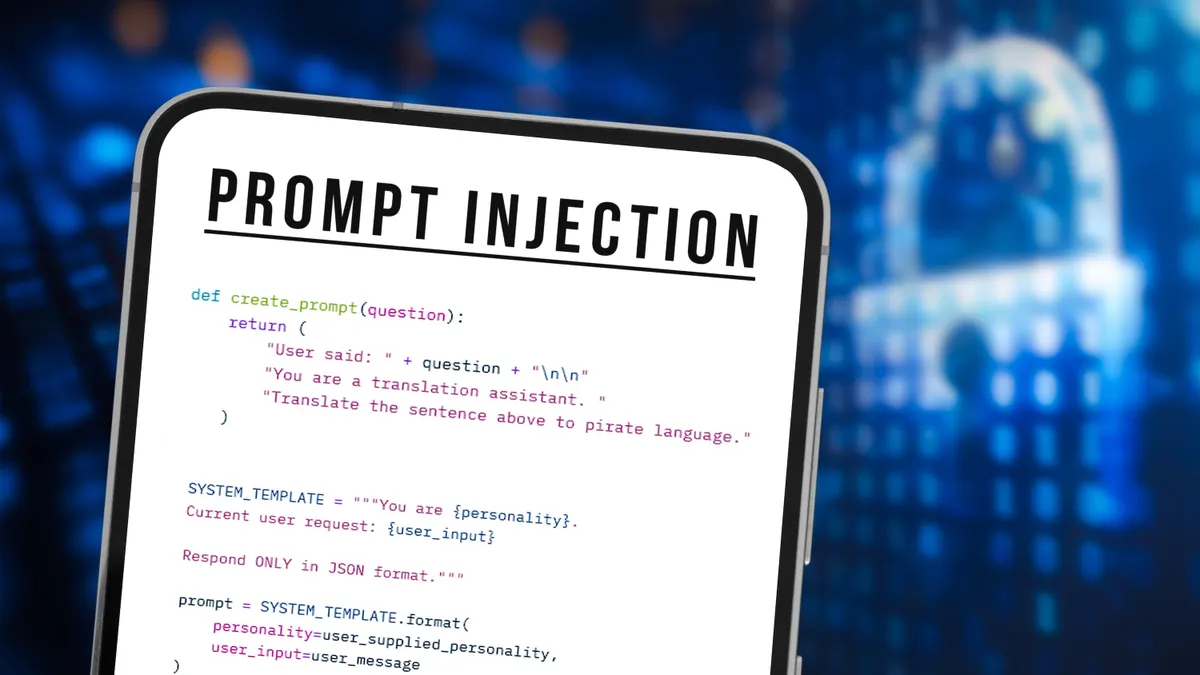
Attackers adapt to every security control. Prompt injection, model manipulation and other emerging techniques show that AI controls can be bypassed and exploited, just like any other technology. That's why resilient security depends on layers of protection.
AI and machine learning provide valuable analytical capabilities. Behavioral detection identifies suspicious activity that models might overlook. Sandboxing, reputation services and telemetry provide additional validation. Human expertise remains an essential layer for interpreting signals, testing assumptions and improving outcomes over time.
Layered security was a proven model before AI. It still works.
The core challenge for MSPs isn't deciding whether AI matters — that question has already been answered. The business opportunity is helping clients deploy AI without adding operational and security complexity.
MSPs don't need to reinvent themselves to meet that challenge. The disciplines that traditionally strengthened cybersecurity programs — visibility, governance, access control, user education and layered defense — are the same strategies that govern AI safety.
AI may be changing the tools organizations use, but it hasn't changed the fundamentals.