Mitel rang in the new year with a wholesale revamp of its partner program, following a larger channel industry trend toward outcome-oriented incentives and points-based rewards.
The enterprise communications technology provider is mobilizing its channel in anticipation of a major sales cycle, as AI governance concerns rekindle interest in hybrid infrastructure strategies.
The market has hit one of its periodic refresh cycles, driven by the need for AI-capable systems and robust data security.
Nearly two-thirds of midsized and enterprise firms have embarked on unified communication modernization projects, according to a Techaisle survey of more than 1,900 business and IT decision-makers commissioned by Mitel.
The situation is critical in key sectors, the report, published earlier this month, found. More than two-thirds of finance, government, and healthcare organizations surveyed have had current systems in place for at least seven years.
“One-size-fits-all doesn't exist anymore,” Mitel CTO Luiz Domingos told Channel Dive. “Each customer has a specific expectation and regulatory or operational demands, and each of the verticals are different. They expect us to offer solutions that are modular, flexible and understand the context of their needs”
In addition to engineering customizable solutions, Mitel is encouraging vertical specialization in healthcare, hospitality, finance, public sector and contact centers across its global network of over 6,000 partners, according to the Global Partner Program announcement. AI data governance is also on the menu.
“Midmarket and enterprise customers value their data sovereignty,” Steve Loebrich, head of channel and distribution sales at Mitel, said. “They want control over where their data is because some of it's very sensitive. We’re focused on integrating an on-premises, private cloud approach for mission critical communications with the benefits of public cloud — that’s where we live.”
More than 9 in 10 of the Techaisle survey respondents said their organizations favored hybrid infrastructure.
“Customers are much more educated about what it is they want,” Loebrich said. “They’re looking for a trusted partner to help deliver on the promise of what it is they want.”
The opportunity for partners is massive, according to Loebrich, extending to an install base of more than 70 million users worldwide who are ready for migration and modernization.
The point of points
Mitel’s program overhaul reflects a broader pivot among large vendors to a service-focused channel philosophy.
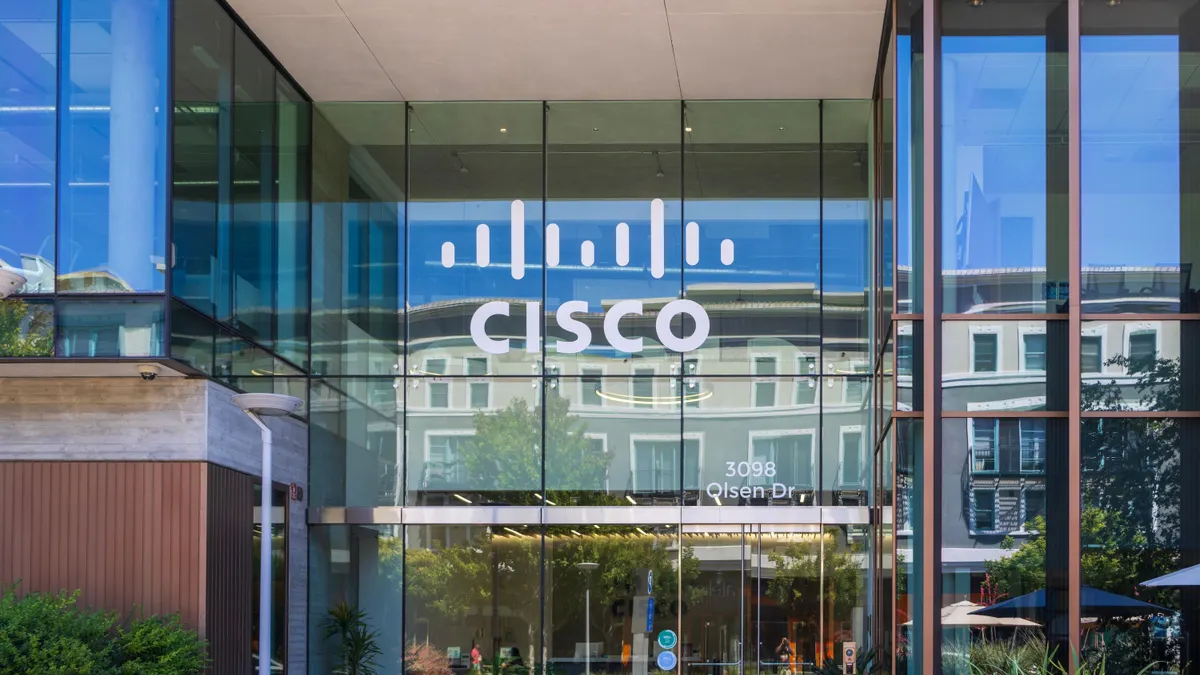
Cisco’s largest channel reset in more than two decades went live last month. The networking giant is pushing resellers to add managed services, deepen product expertise and deliver cross-portfolio sales.
Microsoft instituted a points-based system several years ago and updated its program to prioritize AI solutions late last year. The cloud and software behemoth also made bundling and licensing changes that sowed confusion among some of its partners.
“When you introduce point-based systems, it influences resellers, who have been primarily focused on just the resale part, to expand their services,” Devan Adams, principal analyst at Omdia, a Channel Dive sister company, said.
It can also disrupt a channel ecosystem.
Broadcom took the added step of clarifying points-based rewards and other changes to its VMware channel in December, and Zoom got pushback late last year from some partners as it rolled out the Zoom Up Partner Program, which also features a points system geared to service providers.
“Points-based programs are really focused on rewarding partners beyond the point of sale,” Adams said. “They go beyond reselling to all the things that are done pre-sale and post-sale.”
Mitel’s move sets the provider apart from many of its peers, according to Adams.
“It’s definitely a major overhaul,” said Adams. “To a certain degree, it’s something they’re doing to keep up with the Joneses. But it’s also innovative in that there aren’t many other pure-play solutions providers in the unified communications market that offer this type of program for partners.”
As it rolled out the January program update, Mitel was less than a year past a bankruptcy filing and financial reorganization that was completed in June, preceding a flurry of additional changes. The company got a new board of directors in July and appointed telecom industry veteran Mike Robinson as CEO two months later.
Mitel also took an initial stab at a partner program upgrade last year, integrating the Mitel and Unify partner ecosystems into one program with a centralized management platform. The company acquired Unify in 2023, triggering a merger that made Mitel the second largest global unified communication technology vendor, according to a Futurum Group analysis.
As those changes were underway, Loebrich doubled down on helping Mitel’s partners with some of the heavier lifting that comes with packaging services and products.
“We have a team of channel and distribution account managers and we’re out there selling side-by-side with our partners,” Loebrich said. “We manage the forecast, the revenue, so we have our finger on the pulse of what our partners are doing.”
Loebrich aims for his team to be the conduit between Domingos’ engineers and the channel. “The CTO and the developers all come up with these great ideas, but we have to get those out to the community,” Loebrich said. “For our partners, it’s not just showing up at a customer meeting and sitting at the table — it’s having the technical expertise and the skills to talk about the solutions Luiz and his team are bringing to market.”
Partner support is particularly crucial with generative and agentic AI add-ons, which have rapidly crowded the enterprise software market.
“When you show up and tell a partner about a new generative AI feature, some of them are going to gloss over,” Loebrich said. “You have to package it, and we have to talk about it in a way that the partners can take it to the market, take it to the customers, because they are the face of Mitel.”