Dive Brief:
- Global spending on cloud services rose 29% year over year to $110.9 billion in the final three months of last year, according to research by Omdia, a Channel Dive sister company. The surge marked the sixth consecutive quarter market growth exceeded 20%, driven by broad demand for compute and AI adoption, the analyst firm said.
- Despite ongoing component shortages, the trend is expected to continue this year as agentic AI platforms gain traction. Omdia anticipates global cloud infrastructure services spending to grow by 27% in 2026.
- “For cloud vendors, the challenge is no longer just about scaling capacity quickly enough to meet surging demand, but about doing so with discipline,” Rachel Brindley, senior director, channels, at Omdia, said in the report. “As AI continues to raise infrastructure requirements while constraints remain, vendors that can expand in a more targeted and efficient way will be best positioned to lead in the next phase of competition.”
Dive Insight:
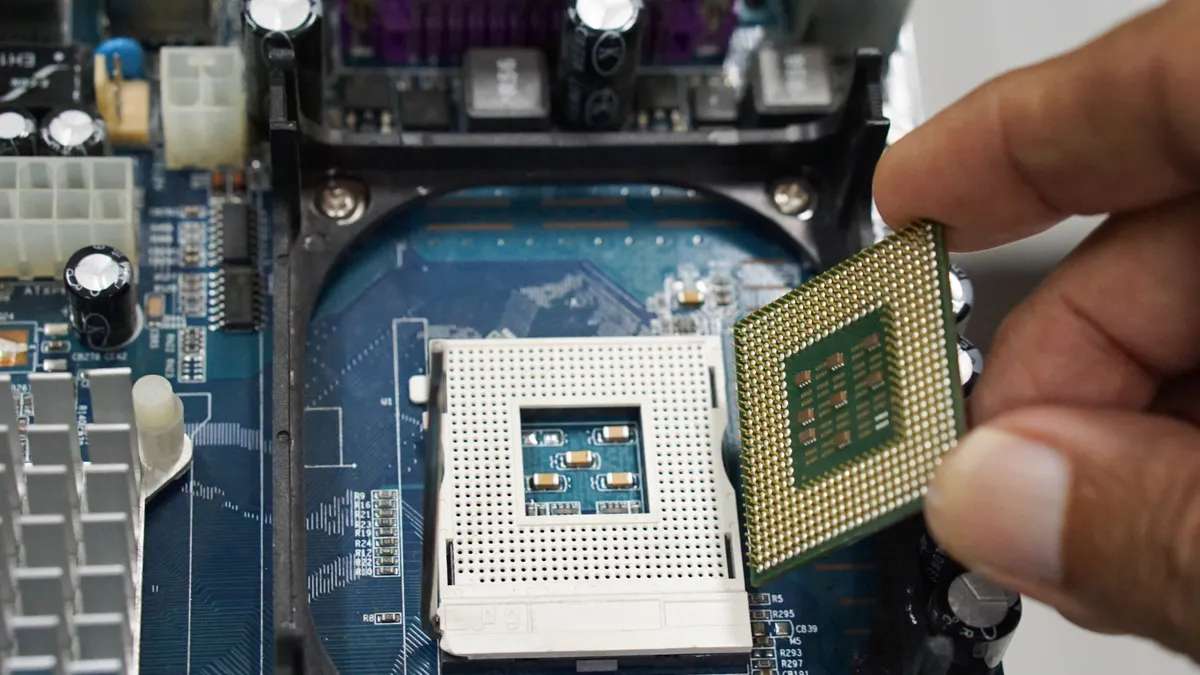
AI’s voracious appetite for compute strained hyperscaler capacity and left the component cupboard bare in the final months of 2025. Hardware vendors saw memory and storage chip shortages drive up production costs, triggering sharp increases in PC pricing.
The chip crunch was an early boon to some partners, who saw customers pull forward procurements last year, Brindley told Channel Dive. “That is a short-term boost,” she cautioned.
Skyrocketing server sales underscored the trend, according to the latest IDC data. Vendors saw server revenue grow more than 52% to over $125 billion in Q4, pushing the segment’s annual take to a record $444 billion — an 80% year-over-year bump. Servers equipped with GPUs accounted for more than half of the market.
“The race for AI adoption is setting the market pace with companies starving for infrastructure looking not only [for] GPUs but also consuming more CPUs among other components in order to feed their needs,” IDC Research Director Juan Seminara said in the report. “We are going to see more price pressures and that may impact on market dynamics with less units but higher average selling prices going forward.”
Server shipments should slow as component prices increase and the most recent refresh cycle ends, Lidice Fernandez, IDC’s group VP for worldwide enterprise infrastructure trackers, told Channel Dive.
PCs followed a similar trajectory, with unit shipments increasing 9% year over year in Q4 ahead of a 2026 slowdown expected by Omdia. “With device replacement demand not yet fully abated, supply-side pressures will be more pronounced and supply will not fully meet demand,” Ben Yeh, principal analyst at the research firm, said. “Actual shipment performance will hinge on vendors’ memory and storage procurement and negotiating leverage.”
As vendors vie for supply, partners with clout will have a distinct edge in the coming months.
“We’re seeing increasing challenges with fulfillment … and changes to vendor terms,” Omdia’s Brindley said. “Larger partners are better placed than smaller partners to some extent as they have greater leverage with their key vendors.”
The new paradigm has created opportunities in the distribution channel, Brindley added. “Distributors are back in vogue as they can support inventory management, manage availability and support and credit,” she said.
Component availability is set to tighten as hyperscalers continue to pump funding into infrastructure buildouts. AWS alone has pledged $200 billion to capital investments this year and Google plans to more than double its capex year over year to over $175 billion.
“This impacts the entire supply chain,” Brindley said. “Chip and memory suppliers are increasing prices which then impacts all in the supply chain.”