Dive Brief:
- The immediate VMware exodus many expected after the virtualization software provider’s acquisition by Broadcom in November 2024 was less dramatic than predicted. However, a more deliberate move to gradually scale back existing deployments has gained momentum, according to a CloudBolt Software survey of 302 IT decision-makers in North America.
- Most respondents — 86% — said their organizations were actively reducing their VMware footprints. Just over half planned phased, partial transitions, tapering off their dependence rather than embarking on a full migration.
- “Two years ago, the market was dominated by knee-jerk speculation and worst-case projections,” CloudBolt CMO Mark Zembal said in a release accompanying the Feb. 17 report. “The fear has cooled, but the pressure hasn’t, and most teams are now making practical moves to build leverage and optionality — even if for some that includes the realization that a portion of their estate never moves off VMware.”
Dive Insight:
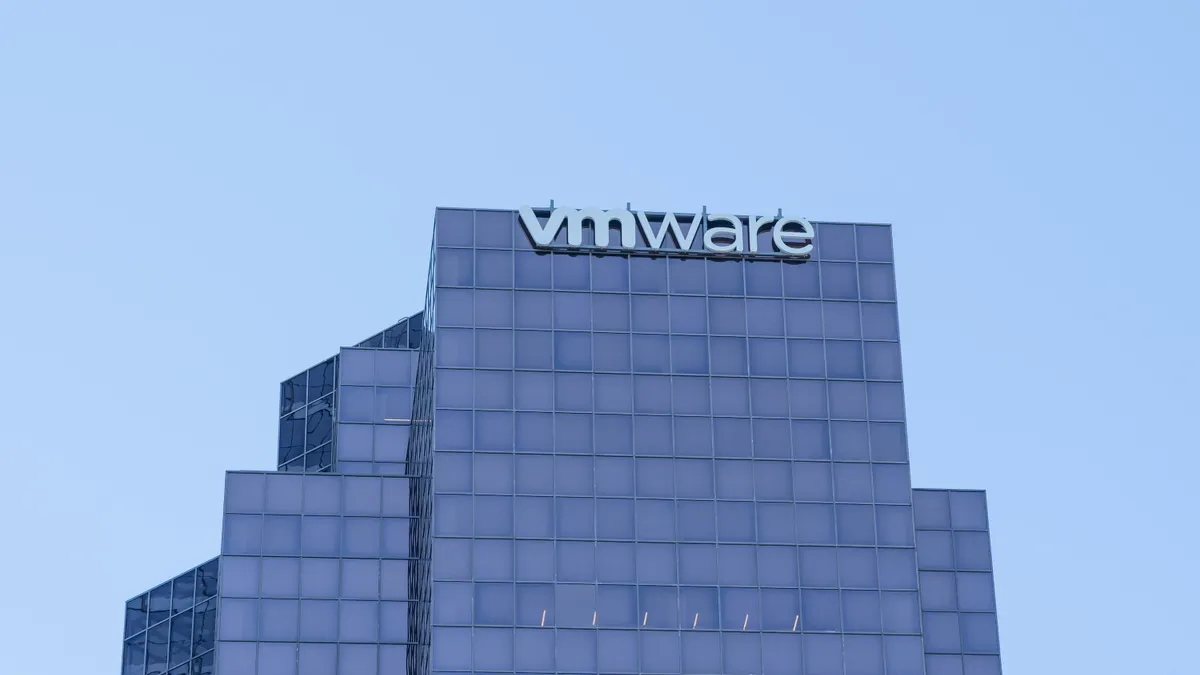
Two years ago, upon the closure of Broadcom’s $61 billion acquisition of VMware, the industry braced for a mass exodus of customers from the legacy virtualization provider.
But those huge migrations didn’t happen. At least, not all at once. Instead, something more measured — and arguably more consequential — has unfolded: a slow, deliberate unraveling of VMware dependence, which Broadcom appears to have anticipated from the start.
In a follow-up to a 2024 baseline survey to assess VMware customer sentiment, CloudBolt found that industry panic has given way to practical adaptation. Enterprises needed time to process profound changes to the VMware product line, pricing structures and partner programs, the cloud cost management software company noted. Most customers were locked into contracts and infrastructure they couldn’t just abandon.
As Broadcom pared VMware’s expansive portfolio down to a small number of product bundles, replaced perpetual licenses with subscriptions and pushed adoption of its VMware Cloud Foundation private cloud, costs increased, but not as sharply as some expected.
In 2024, 73% of organizations expected VMware costs to more than double under Broadcom. Only 14% reported cost increases exceeding 100%, CloudBolt found. More common among respondents were increases in the 25% to 49% range.
Costs aren’t the only pain point.
“The change from ongoing licenses to all-or-nothing subscription bundles has transformed our predictable capex into a volatile opex liability,” one respondent told CloudBolt.
“We have observed a 400% to 700% increase in costs in certain enterprise cases.”Usage costs remain a concern, CloudBolt found, with 85% of IT leaders shaping VMware strategies around the expectation of future price increases.
“The process of unwinding a decade of process dependencies is taking 18 to 24 months,” one respondent noted. “This sideways abstraction is far more complex than a standard cloud lift-and-shift.”
Complete exits have been rare. Only 4% of respondents had fully migrated off VMware. Roughly two in five said they continue to use VMware as they shrink their estates.
CloudBolt’s findings suggest Broadcom’s strategy is functioning as CEO Hock Tan intended. Instead of preserving universal customer retention, the tech giant had prepared to absorb churn in order to maximize revenue from large organizations.
Broadcom grew its software segment revenue 26% year over year to $27 billion in its 2025 fiscal year, largely on the back of “strong adoption of VMware Cloud Foundation,” Tan said during a December earnings call. While AI-fueled hardware sales remained Broadcom’s dominant segment, software accounted for 42% of the company's FY2025 revenue.
Fallout from the acquisition, however, remains disruptive, according to the CloudBolt report. While 60% of respondents said they’re more confident in their VMware strategy now than in 2024, nearly two-thirds acknowledged changing their strategy at least twice since the transaction closed.
Customers who are planning migrations away from VMware have several strategies in mind, CloudBolt found. Almost three-quarters are moving to public cloud infrastructure, far outpacing transitions to alternative hypervisors. Hyper-V and Azure Stack emerged as secondary destinations, while SaaS replacements ranked third.
“Organizations aren’t finding easy escapes,” CloudBolt said.
The top deal-breakers have been the complexity and risk of migration, higher-than-expected costs, and technical limitations.
VMware strategy has become an increasingly visible boardroom concern. A significant chunk — 41% — of respondents said they’re under more pressure from CEOs and CFOs over concerns about VMware costs, risks, and platform flexibility.
“The panic phase is over,” CloudBolt CEO Rod Squires said. “Now it’s execution: reducing dependency, managing dual realities during transition, and building optionality before the next renewal decision tightens the window — and slams the budget.”
CloudBolt’s findings point to a longer-term reshaping of the virtualization market. VMware market share could decline from roughly 70% in 2024 to around 40% by 2029, the report said, citing a Gartner analysis. Dramatic exits are unlikely to drive the attrition, the data suggest. Rather, the shifts – and the concomitant channel partner opportunities – will come as organizations steadily move workloads across successive renewal cycles.