

Dive Brief:
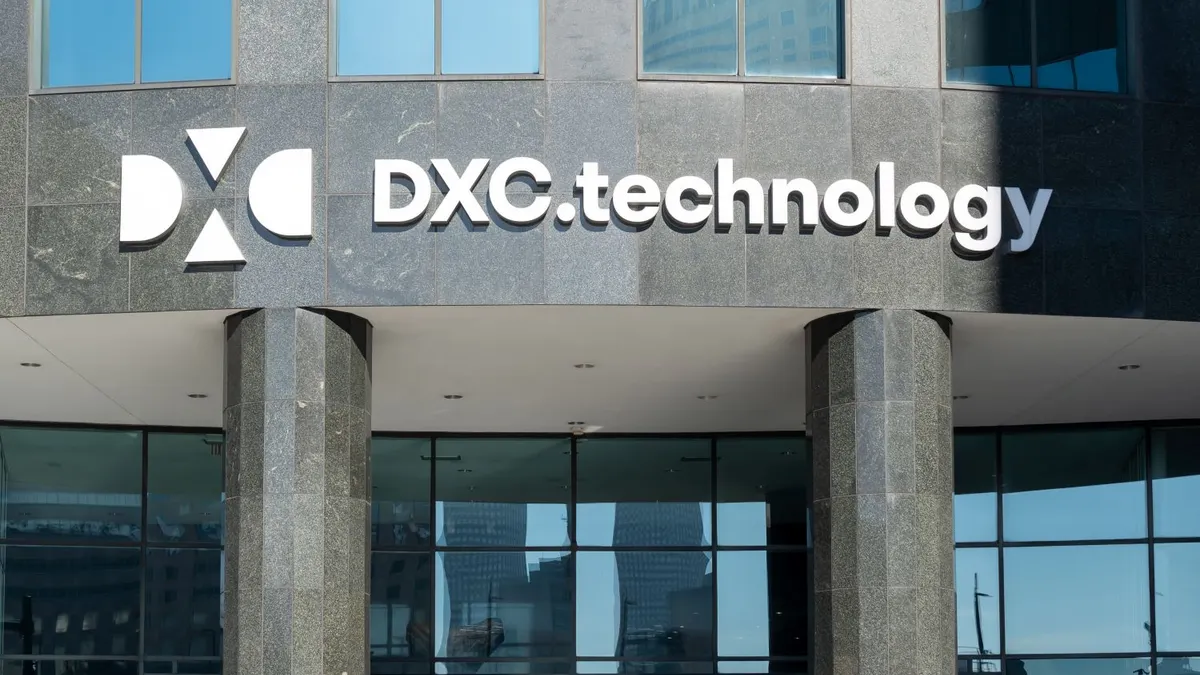
- DXC Technology has formalized a two-track business strategy, executives said during an Oct. 30 earnings call. The company's fast track business houses AI-based offerings in areas such as banking. Raul Fernandez, DXC president and CEO, said during the call that his company has set a goal of generating 10% of its business from fast track within three years.
- DXC's core track, meanwhile, covers its traditional offerings, such as its SAP consulting business. Fernandez said the company is working to bring its core offerings to their "full potential," citing the need to convert its SAP practice's capabilities into "strong revenue growth." The company aims to double its SAP revenue over the next three years.
- The company's growth initiatives aim to counter decreasing revenue. DXC's quarterly revenue dropped 4.2% year over year, on an organic basis, for its fiscal second quarter ended Sept. 30. The decline was within DXC's guidance, which forecast a 4.5% to 3.5% decrease. The company said its adjusted EBIT margin of 8% and its non-GAAP diluted EPS of $0.84 were above its guidance range.
Dive Insight:
DXC launched in 2017, following the merger of Computer Sciences Corp. and Hewlett Packard Enterprise's Enterprise Services business. Top-line growth has proved elusive since then. DXC's revenue dropped 34% between fiscal 2020 and fiscal 2025, from $19.6 billion to $12.9 billion.
The two-track focus and AI emphasis are the latest efforts to put the company on a path to expansion. Paradoxically, DXC's future growth will rely to some degree on its technology past. One of the company's fast track efforts focuses on its Hogan banking software, which DXC's predecessor company, Computer Sciences Corp., absorbed in a 1996 acquisition.
"We are using our legacy as leverage," Fernandez said.
Specifically, DXC plans to build upon the Hogan core banking platform, developing agentic offerings that will let its banking customers provide new services, he added.
"It's an extension of Hogan in a very lightweight manner, in an AI API-centric manner," Fernandez said.
Other IT service providers are taking similar legacy-meets-AI approaches. Cognizant, a professional services company, is deploying multi-agent workflows that link its TriZetto healthcare administration platform to "front-end experience platforms" such as Salesforce, Genesys and ServiceNow, noted Ravi Kumar S, Cognizant's CEO, during an Oct. 29 earnings call.
Cognizant acquired the healthcare platform through its 2014 purchase of Trizetto Group, which was founded in 1997.